
The AI infrastructure story now spans thousands of new acres. On April 14, Microsoft (MSFT) announced plans to acquire about 3,200 acres near Cheyenne, Wyoming for a major data center campus—the same day that Broadcom (AVGO) publicized a long-term, multi-generation custom silicon partnership with Meta Platforms (META). These developments signal that AI infrastructure buildout is shifting from near-term speculation toward sustained, multi-year capital investment—more comparable to utility-scale projects than to typical software cycles.
Physical Scale and Strategic Partnership: Key Details from Microsoft and Broadcom
Microsoft's Wyoming expansion involves two land parcels: a 200-acre site in the Bison Business Park on Wapiti Trail, and a much larger 3,000-acre tract southeast of Cheyenne, adjacent to the first site. Microsoft has operated data centers in Cheyenne since 2012 and has committed over $68 million in off-site infrastructure improvements in the area. This move extends its existing operational base, supporting future growth and further establishing Southeast Wyoming as a tech hub.
Broadcom, meanwhile, announced a multi-year, multi-generation partnership with Meta Platforms (META) to support the MTIA custom silicon program. The agreement includes support for multiple generations of MTIA chips covering both training and inference, along with networking components and a focus on system-level improvements and R&D. The initial commitment includes more than 1 gigawatt of compute capacity, and extends through at least 2029. On the day of this announcement, Bernstein SocGen Group reaffirmed its Outperform rating on Broadcom with a $525 price target, noting that the new agreement's scale and multi-year scope is significant. However, Bernstein also indicated the deal does not appear to change Broadcom’s medium-term outlook compared to previous guidance provided in March, while the longer commitment through 2029 is a noteworthy update.
These moves reflect evolving industry structure: for Meta, co-developing custom silicon with a single partner increases supply chain control and suggests long-term capacity planning. This deepens vendor lock-in and vertical integration—shifting the competitive landscape for hyperscalers and their suppliers.
Stocks365 Take: Current Market Signals for MSFT and META
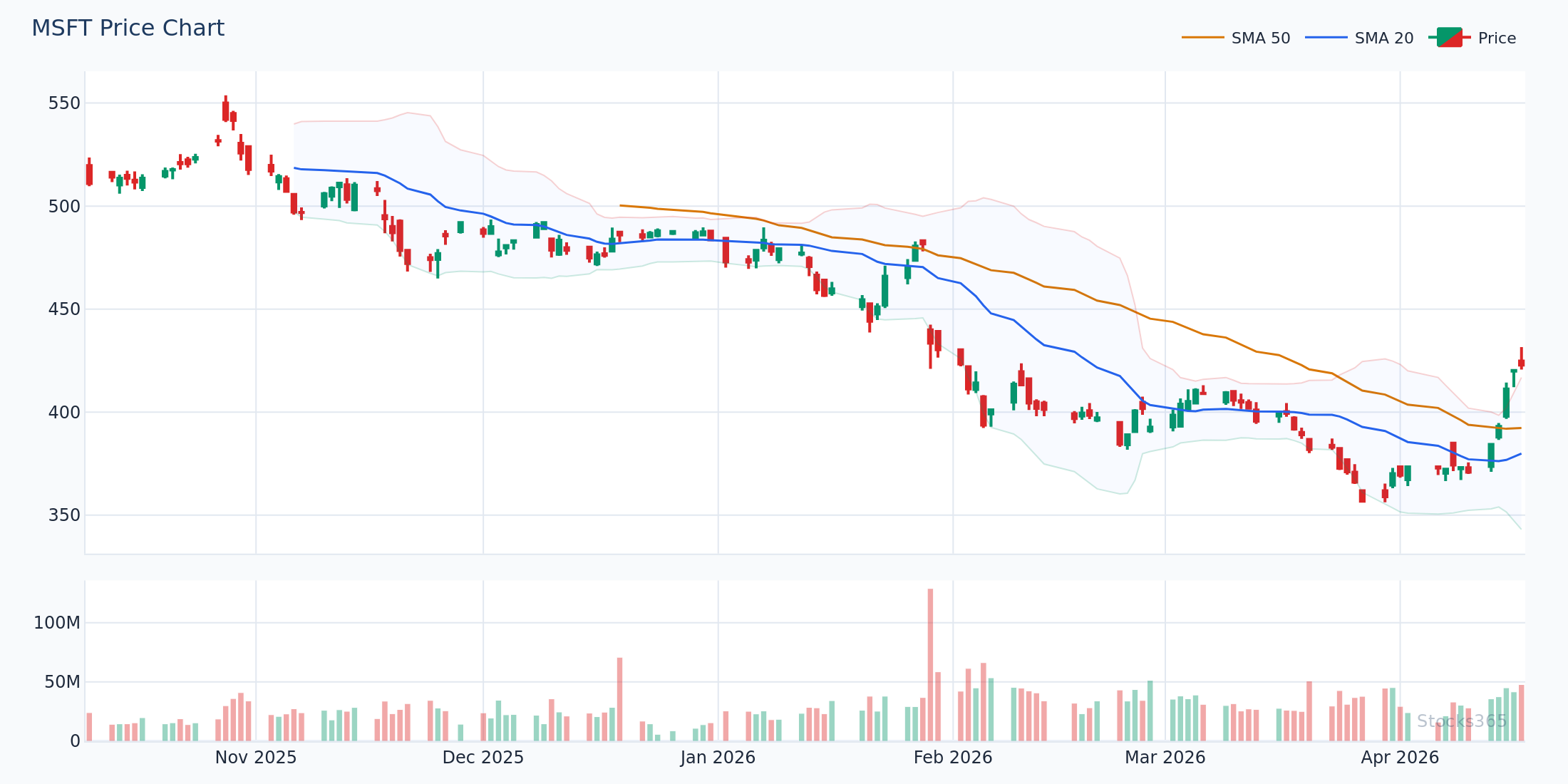
Microsoft (MSFT) ended the week at $422.79, up 0.6%. The Stocks365 volatility model currently classifies MSFT in a 'normal volatility' regime—historically associated with range-bound trading until a defining catalyst materializes. No active directional model signal is present. Investors seeking to benefit from the Cheyenne expansion may prefer to wait for confirmation in capital expenditure pacing before adjusting positions.
Meta Platforms (META) closed at $688.55, up 1.7% on the session. With no company-specific news outside of the Broadcom announcement, META’s move suggests the market is reacting positively to developments in AI infrastructure economics. The Stocks365 model issues an active BUY signal for META, with a trust score of 53%—suggesting a directional tilt under moderate conviction, and signaling a disciplined, rather than aggressive, trading stance. If Meta sustains above these levels as next week's broader earnings releases arrive, that signal could strengthen.
Long-Term Shifts: Historic Parallels and Future Watchpoints
There is precedent for this kind of physical infrastructure acceleration. In the 2017–2019 wave of data center land acquisitions, Amazon, Google, and Microsoft built campuses across states like Virginia, Ohio, and Iowa—investments that later drove operating leverage and profitability as cloud demand surged. The current buildout differs in one key respect: demand for AI workloads is already materializing, increasing urgency around capacity deployment.
Similarly, the 2018–2019 shift toward custom silicon—exemplified by Google’s TPU program and Amazon’s Inferentia chip initiative—reshaped the supply and design process for advanced semiconductors. Broadcom’s new role as a strategic design partner, rather than just supplier, in the MTIA program marks a further upgrade in competitive positioning.
Looking ahead, the tone Microsoft sets on its next earnings call regarding capex intensity will be crucial: accelerated spending could validate the scale of the Cheyenne acquisition, while conservative guidance might recast it as a liability. For Broadcom and Meta, the partnership’s timeline through at least 2029 spans significant macro risks, including potential rate changes. If long-term Treasury yields rise and term premiums expand, large-cap tech names like MSFT and META could face renewed discount rate pressure.
Ultimately, these are signs of a maturing AI investment regime—one where physical assets and multi-year procurement cycles drive the narrative. The Stocks365 META BUY signal at a 53% trust level echoes this: the market sees opportunity, but the regime is still developing. Investors will be watching closely for confirmation in company guidance and broader sector multiples as the next earnings cycle begins.
