
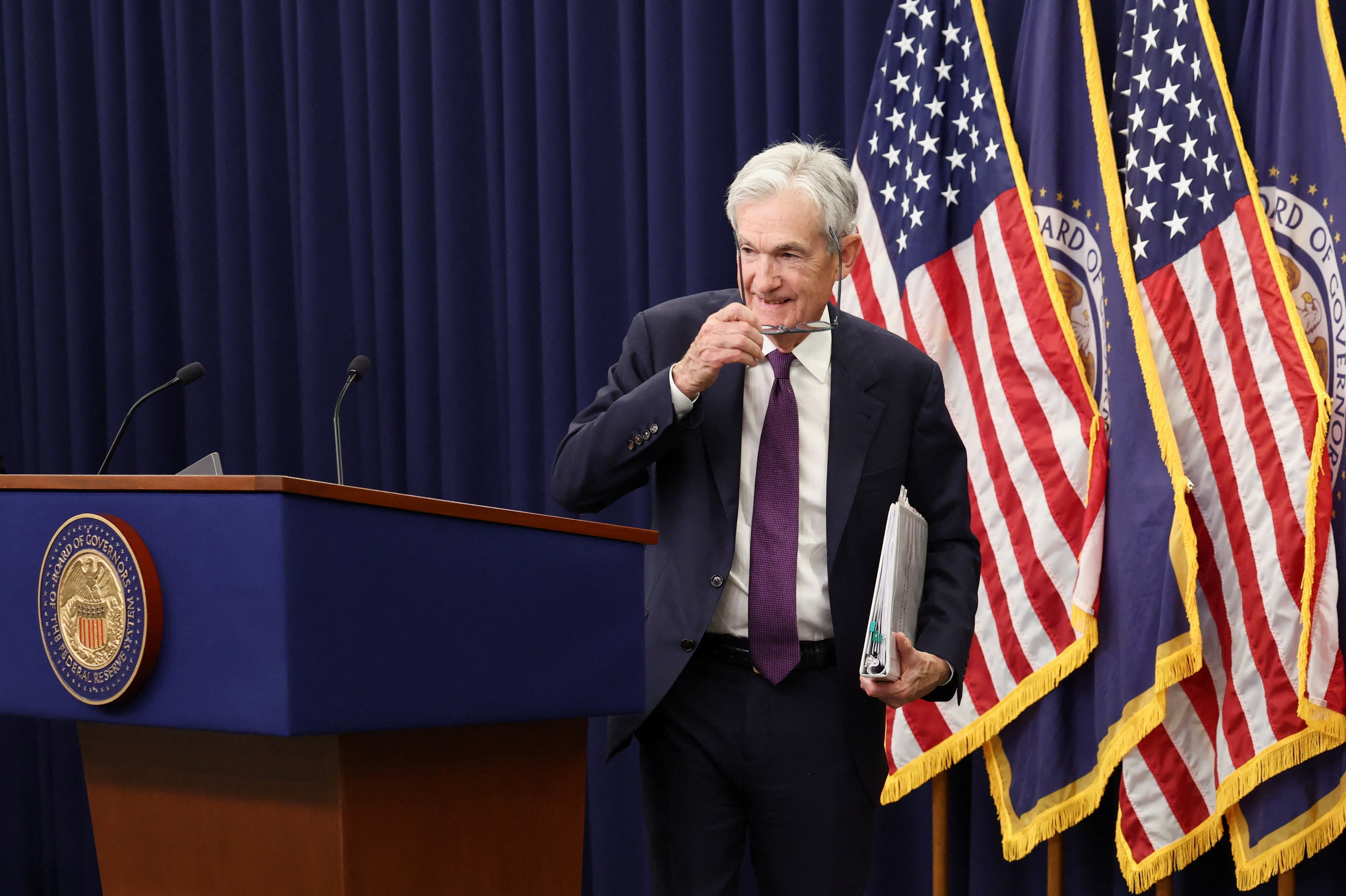
Crude oil (CL=F) is pressing toward $120 a barrel on deepening supply fears, and that single fact is doing more damage to the rate-cut narrative than anything Jerome Powell said at the podium. The Fed held rates steady today — the effective funds rate sits at — but the vote behind that decision was the most fractured since 1992, and bond markets noticed immediately.
The 10-year Treasury yield came into Wednesday at , the 2-year at , and the spread between them widened to by today's close, per FRED data. That steepening isn't friendly. It tells you the long end is selling off on inflation risk — the exact kind of stagflation signal that freezes a Fed committee in place and splits hawks from doves into open warfare.
Stocks stumbled into the close. That tracks: a fractured Fed plus an oil spike is a risk-off setup with no obvious hedge. Equities are caught between a central bank that can't cut because energy is re-igniting inflation and can't hike because growth is already fragile. Neither chair is comfortable right now.
Why 1992 Is the Comparison That Should Worry Traders Tonight
The last time the FOMC vote was this divided was 1992 — a period when the Fed was navigating a sluggish post-recession recovery with inflation simmering in the background. The parallel isn't perfect, but the structural tension is similar: growth concerns pulling one wing of the committee toward easing while supply-side price pressure pulls the other toward caution. What happened after that fractured vote? The Fed eventually cut, and it took far longer for inflation to normalize than the consensus expected.
That's the historical anchor worth sitting with tonight. Divided committees don't resolve cleanly or quickly. They telegraph uncertainty, and uncertainty is exactly what bond vigilantes feed on. The 50-basis-point spread between the 10-year and 2-year is still relatively compressed by historical standards — but it's been moving in one direction since this oil rally gathered momentum, and a crude print near $120 suggests that drift isn't done.
Notable.
The earnings picture this week has been similarly bifurcated — showed how differently the market is treating companies depending on margin exposure. Energy input costs are the variable that ties those two worlds together now. A company with tight margins and high energy sensitivity faces a completely different second half than one that doesn't.
What the Oil Move Is Actually Saying About the Fed's Bind
Oil surging toward $120 on supply fears isn't just a commodities story — it's a monetary policy story. Every dollar crude climbs is another data point that makes the dovish camp inside the FOMC harder to justify. The hawks who dissented today aren't fringe voices; they're reading the same energy-price tape the rest of the market is.
Think about the positioning that's now required. If you're long duration — long bonds, long rate-sensitive growth stocks — you needed a clear dovish signal today. Instead, you got a hold vote with a fractured committee and an oil market screaming stagflation. That's not the setup you wanted. Expect some of that positioning to get unwound tomorrow morning, particularly in the long-end of the curve and in sectors that had been bid on rate-cut hope.
The rotation risk is real. Energy itself gets a bid from $120 crude, obviously. But the rest of the market is taking cover. Financials are complicated — steeper yield curve is theoretically positive for net interest margins, but a stagflationary macro backdrop neutralizes a lot of that benefit. Retail and consumer discretionary face direct margin compression if energy stays elevated. Technology, which had been celebrating earnings beats this week, now has to reckon with a higher-for-longer discount rate again.
Is the AI earnings story strong enough to absorb that re-rating? Our analysis of the numbers behind this quarter's AI euphoria narrative made the case that the valuations embedded in several names leave almost no room for a yield shock — and Wednesday just delivered one.

The Three Levels That Will Define Thursday's Open
Here's what to track when markets reopen. First, watch the 10-year yield. If it pushes materially above the 4.36% level it came into today at, the bond selloff is accelerating and equity risk premiums have to reprice — that's additional downside pressure across the board. If it pulls back, some of today's stock damage may be retraced.
Second, watch crude. The move toward $120 is the catalyst for everything else on this page. A continuation above $120 is a qualitatively different world — it forces the inflation conversation back to the center of every Fed speech and every earnings call.
Third — and this one is underappreciated — watch the short end of the curve. The 2-year at 3.84% is essentially pricing the funds rate staying where it is for an extended period. If that yield starts moving higher, the market is beginning to price in hikes, not cuts. That would be a very different regime than anything the equity market has been positioned for this quarter.
Unlikely? Maybe. But the 1992 parallel suggests that once a committee fractures this visibly, the subsequent path is rarely the one consensus expected.
Retail trading platforms have been handling elevated volumes this earnings season — Robinhood's Q1 numbers showed just how much activity surges when volatility picks up — and Wednesday's macro cocktail is exactly the kind of session that drives that behavior. Expect tomorrow's pre-market flow to be active. Options positioning around crude and rate-sensitive names will be worth monitoring before the 9:30 open.
The setup into Thursday is straightforward to describe and genuinely difficult to trade. You have an oil market repricing inflation risk, a Fed committee that disagrees with itself, a yield curve steepening on the wrong kind of growth, and equity investors who spent the past several sessions rotating into risk on the assumption that rate cuts were near. One of those stories is about to be proven wrong. Tonight's job is figuring out which one.