Ceasefire Sends Commodity Markets Into Motion
Global commodity markets shifted dramatically after the United States and Iran agreed to a two-week ceasefire, triggering a swift repricing across key raw materials. Crude Oil (CL=F) plunged on the news, while Gold (GC=F) advanced — a split reaction that tells two very different stories about how traders are reading the geopolitical moment.
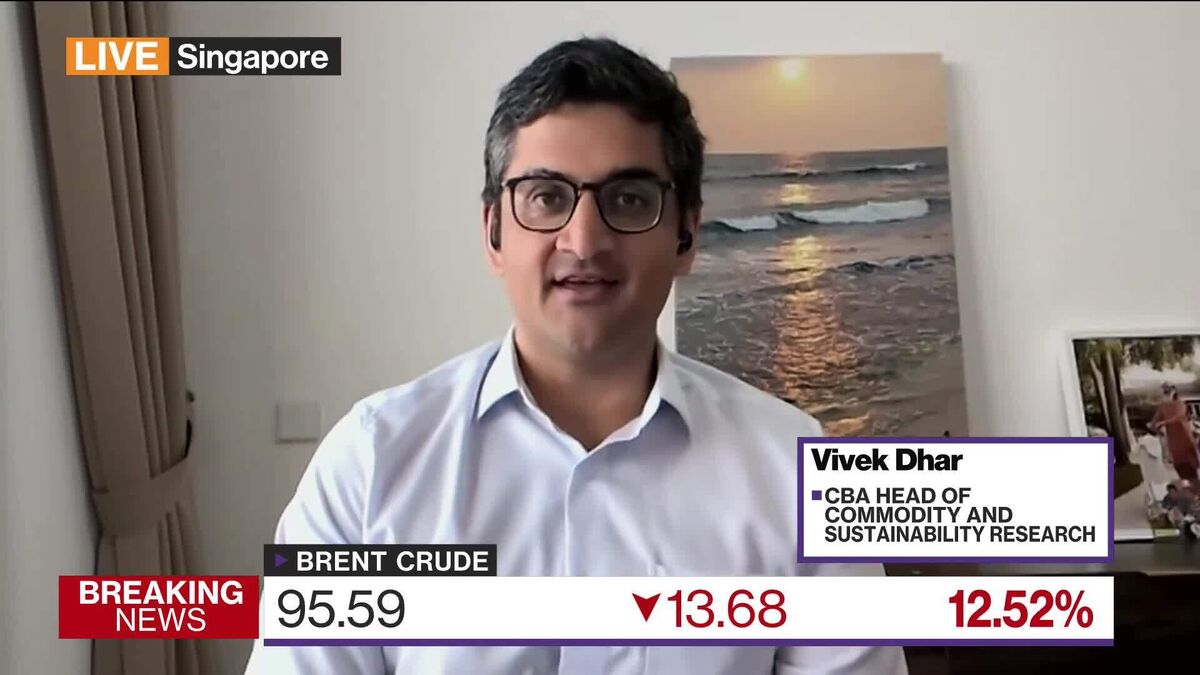
Vivek Dhar, Head of Commodity and Sustainability Research at the Commonwealth Bank of Australia, weighed in on the developing situation, speaking with Haidi Stroud-Watts and Paul Allen on Bloomberg: The Asia Trade, as reported by Bloomberg.
Why Oil Is Falling
The drop in crude prices reflects a straightforward calculus: a ceasefire between the US and Iran, even a temporary one, reduces the immediate threat of supply disruptions in one of the world's most strategically sensitive energy corridors.
Iran is a significant producer in the global oil market, and any easing of tensions between Tehran and Washington tends to remove the geopolitical risk premium that often underpins crude prices during periods of heightened conflict. With a two-week window now in place, traders appear willing to unwind some of that premium, at least in the near term.
Dhar's commentary, as covered by Bloomberg, reflects how quickly commodity sentiment can shift when geopolitical flashpoints cool — even briefly. The move in Crude Oil (CL=F) underscores just how sensitive energy markets remain to any development involving Iranian supply.
Gold Takes the Other Path
While oil sold off, Gold (GC=F) moved in the opposite direction — advancing as investors processed the ceasefire news with a degree of caution rather than outright relief.
This divergence is telling. Gold's advance suggests that while some traders are relieved enough to exit the oil risk premium, others remain uncertain about whether a two-week ceasefire represents a genuine de-escalation or simply a pause before further tension. The precious metal's continued strength points to residual unease in the broader market, with investors still seeking safe-haven exposure.
The behavior of gold in this context is consistent with its role as a barometer of underlying anxiety — even as headline risk appears to ease, the metal's advance signals that not everyone is convinced the situation is fully resolved.
CBA's Dhar on the Commodity Outlook
Vivek Dhar, speaking on Bloomberg, offered perspective on what this ceasefire means for the commodities complex more broadly. As Head of Commodity and Sustainability Research at the Commonwealth Bank of Australia, Dhar is closely watched by institutional investors across the Asia-Pacific region for his reads on energy and raw material markets.
His appearance on Bloomberg: The Asia Trade highlighted the immediate market reaction — the oil plunge and gold advance — and placed those moves within the context of evolving US-Iran relations. While the ceasefire introduces a degree of near-term calm to energy markets, the temporary nature of the agreement means traders will be watching closely for any signs of breakdown or extension.
The two-week timeframe is critical. It is short enough to keep markets on alert and long enough to allow diplomatic channels to either advance or collapse. For commodity traders, that uncertainty window is where opportunity and risk collide.
What Traders Should Watch
With the ceasefire now the dominant narrative driving commodity prices, several key developments deserve close attention:
- Ceasefire durability: Any sign that the two-week agreement is fraying could rapidly reverse the decline in Crude Oil (CL=F) and accelerate gains in Gold (GC=F).
- Diplomatic signals: Statements from Washington or Tehran over the coming days will be scrutinized for indications of whether talks are progressing toward a longer-term arrangement or heading toward renewed confrontation.
- Energy supply dynamics: Traders should monitor whether any actual changes in Iranian oil flows accompany the ceasefire, as rhetoric and physical supply can diverge significantly during diplomatic windows.
- Safe-haven demand: Gold's advance suggests some investors are not fully convinced by the ceasefire. Watch for either a pullback in gold if confidence grows, or continued strength if uncertainty persists.
- Broader commodity complex: Energy-linked assets and commodity-heavy equities, including those tied to oil producers, may experience elevated volatility as the two-week clock ticks down.
A Temporary Calm or a Turning Point?
The central question hanging over commodity markets right now is whether this ceasefire represents the beginning of a genuine diplomatic shift or simply a brief pause in a long-running standoff. For Crude Oil (CL=F), the answer to that question could mean the difference between sustained price weakness and a sharp reversal. For Gold (GC=F), even a partial resolution might eventually weigh on demand for safe-haven assets — but that outcome remains far from certain.
As Dhar's analysis on Bloomberg makes clear, commodity markets are acutely sensitive to the geopolitical backdrop, and a development as significant as a US-Iran ceasefire — however temporary — demands close attention from anyone with exposure to energy or precious metals.
The next two weeks will be pivotal. Traders operating in this space would do well to stay nimble and avoid overcommitting to a single directional thesis until the diplomatic picture becomes clearer.
Stocks365 Take
This is a classic geopolitical whipsaw setup, and our signals are reflecting the tension in real time. The split reaction — Crude Oil (CL=F) down, Gold (GC=F) up — tells us the market is not fully buying the ceasefire as a resolution. It is treating it as a risk-reduction event for oil but not a confidence-building one for broader stability.
For traders on Stocks365, our commodities signal dashboard is worth watching closely over the next 48 to 72 hours. We would flag Gold (GC=F) as a hold with upside bias — the metal's advance in the face of apparent de-escalation is a meaningful signal that smart money remains cautious. A breakdown in the ceasefire talks would likely send gold surging and oil rebounding sharply.
On the energy side, we would urge caution before chasing the oil decline too aggressively. Two-week ceasefires in complex geopolitical situations have a history of reversing quickly, and any headline suggesting the talks are stalling could trigger a rapid repricing. Our risk framework suggests keeping position sizes modest and stops tight on any directional crude trade until the diplomatic window clarifies.
Watch the Bloomberg coverage of Dhar and the CBA research desk closely — they have demonstrated sharp reads on commodity market dynamics, and further commentary from that team could serve as an early signal for how institutional money is repositioning.
