
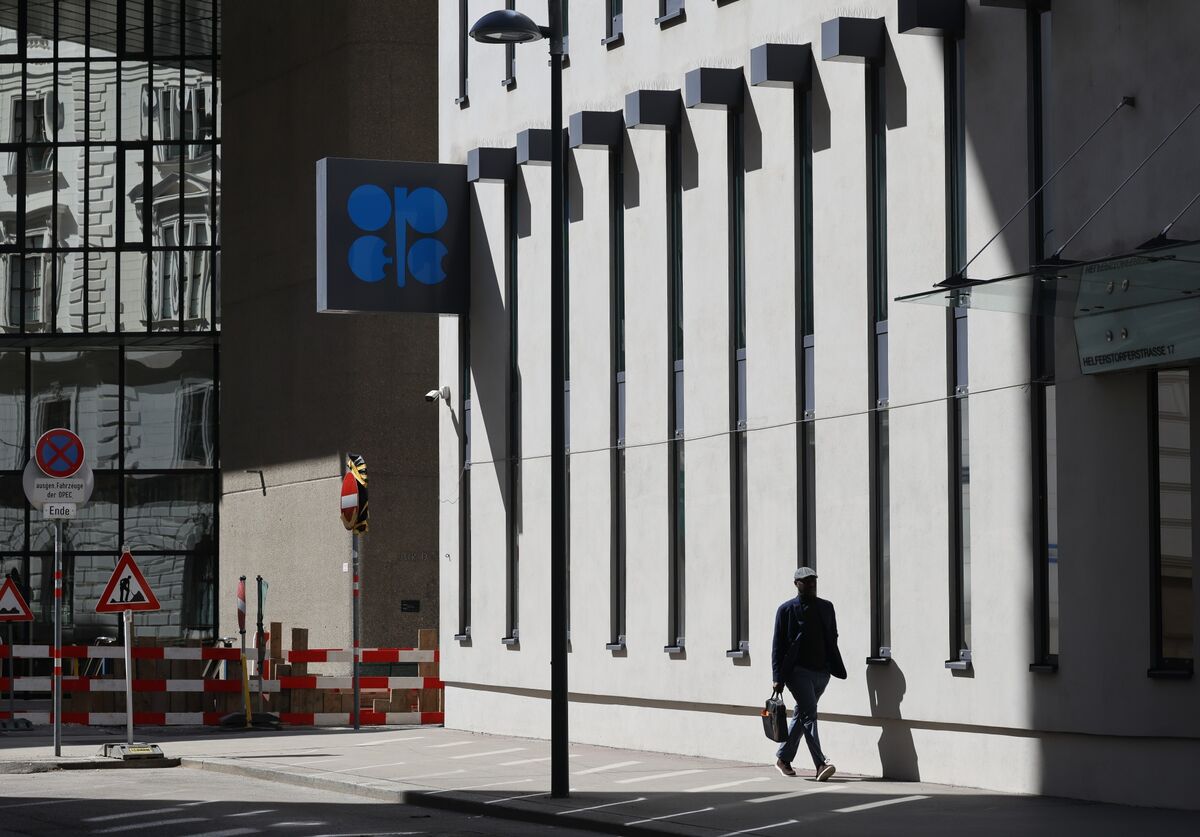
The announcement landed before most traders had finished their morning coffee. Seven members of OPEC+ reached an agreement in principle Saturday to raise oil output targets by approximately 188,000 barrels per day in June, according to Reuters, citing unnamed sources familiar with OPEC+ thinking. The decision comes one day before a formal policy meeting Sunday. It also comes days after the most consequential structural event in the group's recent history: the United Arab Emirates formally exiting OPEC on May 1.
The timing is not incidental. It is the whole story. Strip away the headline barrel figure and what you have is a cartel trying to assert relevance into a supply picture it no longer fully controls — and doing so in a week when the Strait of Hormuz, the artery through which a meaningful share of global crude flows, is at a near-standstill because of the Iran war. The Reuters report itself flagged it plainly: the move is largely symbolic due to that disruption. A production hike that cannot reach the market is, operationally, noise. The question for oil traders sitting in front of live screens this Saturday morning is what the signal beneath that noise actually is.

A Cartel Shrinking Around Its Own Decision Table
The UAE's exit is not a footnote. Saudi Arabia built OPEC+ as a coalition of discipline, and the UAE was among its largest producers and most consequential swing voices. According to the source material, the June hike of 188,000 barrels per day is structured similarly to April's hike of 206,000 barrels per day — minus the UAE's share. That arithmetic tells you something important: the remaining seven members are pressing forward, but the output base they're drawing from has a visible hole in it.
This is reminiscent of the dynamics that followed the 2020 OPEC price war, when Saudi Arabia and Russia briefly operated as near-adversaries before hammering out a historic production cut in April of that year. The difference then was that the group was cutting into a demand collapse. Now, the group is raising into a supply disruption — and doing so with a smaller coalition. The asymmetric irony is that tighter Hormuz traffic may be suppressing the physical price impact of whatever barrels these seven nations claim they're adding. If the strait reopens faster than the market prices in, the June hike could suddenly look much less symbolic. If the disruption deepens, the hike is irrelevant and the geopolitical premium in crude stays bid.
One pattern worth contextualizing here: in the run-up to OPEC policy shifts since 2022, energy equity volatility has tended to front-run the official announcement by two to three sessions. 5% surge made the point that neither move was built on what the surface narrative suggested — and the same lens applies here. A symbolic production hike from a shrinking cartel, against an active war disruption, is not a simple bullish catalyst for energy names.
What the Rate Backdrop Does to This Energy Setup
Oil does not trade in a vacuum from fixed income. The 10-year Treasury yield closed April at , per FRED data, while the 2-year yield sat at . The 10Y-2Y spread, as of May 1, reads — a curve that has been steepening, which historically accompanies either a late-cycle growth scare or a reflationary impulse. The Federal Funds Effective Rate stood at as of April 30, per FRED, consistent with the Fed's April 29 FOMC statement holding policy steady, per the Fed's own press release.
That rate configuration matters for energy equities in a specific way. A steepening curve in a geopolitical disruption environment has historically supported commodity producers with clean balance sheets — the ones who can absorb capex cost inflation without reaching for expensive debt. It punishes leveraged explorers and refiners with complex supply chains. The Hormuz disruption is already creating a cost and logistics regime that favors well-capitalized integrated producers over smaller E&P names. Our energy infrastructure earnings thread from May 1 laid out exactly this dynamic: the rate regime is not neutral for energy — it is actively sorting winners from losers at the balance-sheet level right now.

The Fed staying on hold also means there is no near-term monetary cushion for a demand-side growth scare. If the Iran war extends the Hormuz disruption into Q3, the stagflationary read — higher energy input costs, constrained Fed optionality — becomes the fat-tail risk that the rates market has not fully priced in. The 10Y at 4.40% with a 51-basis-point curve steepness is not a distressed signal. But it is not a permissive one either.
The Geopolitics OPEC Cannot Paper Over With Barrel Counts
Saudi Arabia's position deserves a direct assessment. The kingdom has staked its medium-term fiscal model on sustained oil revenue above a certain price floor. The UAE's departure fractures coalition discipline at a moment when the group's ability to enforce quotas — already a chronic problem — is further complicated by the fact that a major choke point in global oil transit is functionally impaired. Riyadh can announce a production hike. It cannot guarantee that hike reaches the global market.
There is a precedent worth anchoring to. Prices recovered — but only after a series of meetings in which cartel unity was visibly rebuilt. The current situation is structurally different: the supply disruption is geopolitical, not self-inflicted, and a member has actually left rather than simply defected from quotas. The cohesion repair task is harder this time.
The Bloomberg and Reuters reporting on Saturday's agreement is clear that Sunday's formal meeting is still ahead. Agreements in principle have occasionally unraveled at the table — the last few OPEC cycles have produced more than one instance where pre-meeting consensus reports were followed by longer-than-expected negotiations. That optionality cuts both ways. If Sunday's meeting produces a stronger-than-expected unified posture from the remaining members, with explicit language on UAE quota absorption, the symbolic read on 188,000 bpd could shift. If it produces visible disagreement or ambiguity about how the UAE's departed share is handled, the credibility hit to the group compounds.
For traders watching energy names at Monday's open, the operative framework is this: the physical disruption from Hormuz is the dominant variable, not OPEC's production ceiling. Any equity or futures move driven purely by the 188,000 bpd headline is, by the group's own admission, reacting to a symbolic signal. The more durable setup — as our infrastructure earnings piece argued — is in names with direct exposure to the logistical rerouting premium that a sustained Hormuz disruption creates, not in names whose thesis depends on a functioning Persian Gulf transit corridor.
Watch Sunday's formal OPEC+ meeting for one specific thing: whether the joint communiqué includes any language on how the remaining seven members plan to address the UAE's departed production allocation. That single sentence — or its absence — will tell you more about where Brent trades Monday morning than the 188,000 barrel figure itself.