

Rivian Automotive (RIVN) confirmed the start of saleable R2 production at its Normal, Illinois plant in Thursday's earnings call — a milestone CEO RJ Scaringe called "a game changer" for the company's path to profitability. Across the healthcare aisle, Baxter International (BAX) and Labcorp (LH) each reported Q1 2026 results and issued updated full-year guidance, while OrthoPediatrics (KIDS) posted a record 45,000 children treated in the quarter. Meanwhile, T. Rowe Price (TROW) flagged that markets declined in March on Iran-driven energy-price pressure before reversing early in Q2. Five calls. One evening. The spread between what's working and what isn't is the real story.

Rivian's R2 Cost Math Is the Most Consequential Number in Thursday's Batch
Strip away every other print from Thursday night and the number that demands the most attention is this: Rivian's R2 bill of materials is expected to run at approximately half the cost of the R1 platform, per the company's Q1 2026 earnings call. Non-BOM cost of goods sold is targeted to fall by more than 50% as well — driven by large die castings, a structural battery pack, a next-generation electrical architecture that removes miles of copper wire, and consolidation of high-voltage electronics. That is not incremental. That is a structural reset of the unit economics.
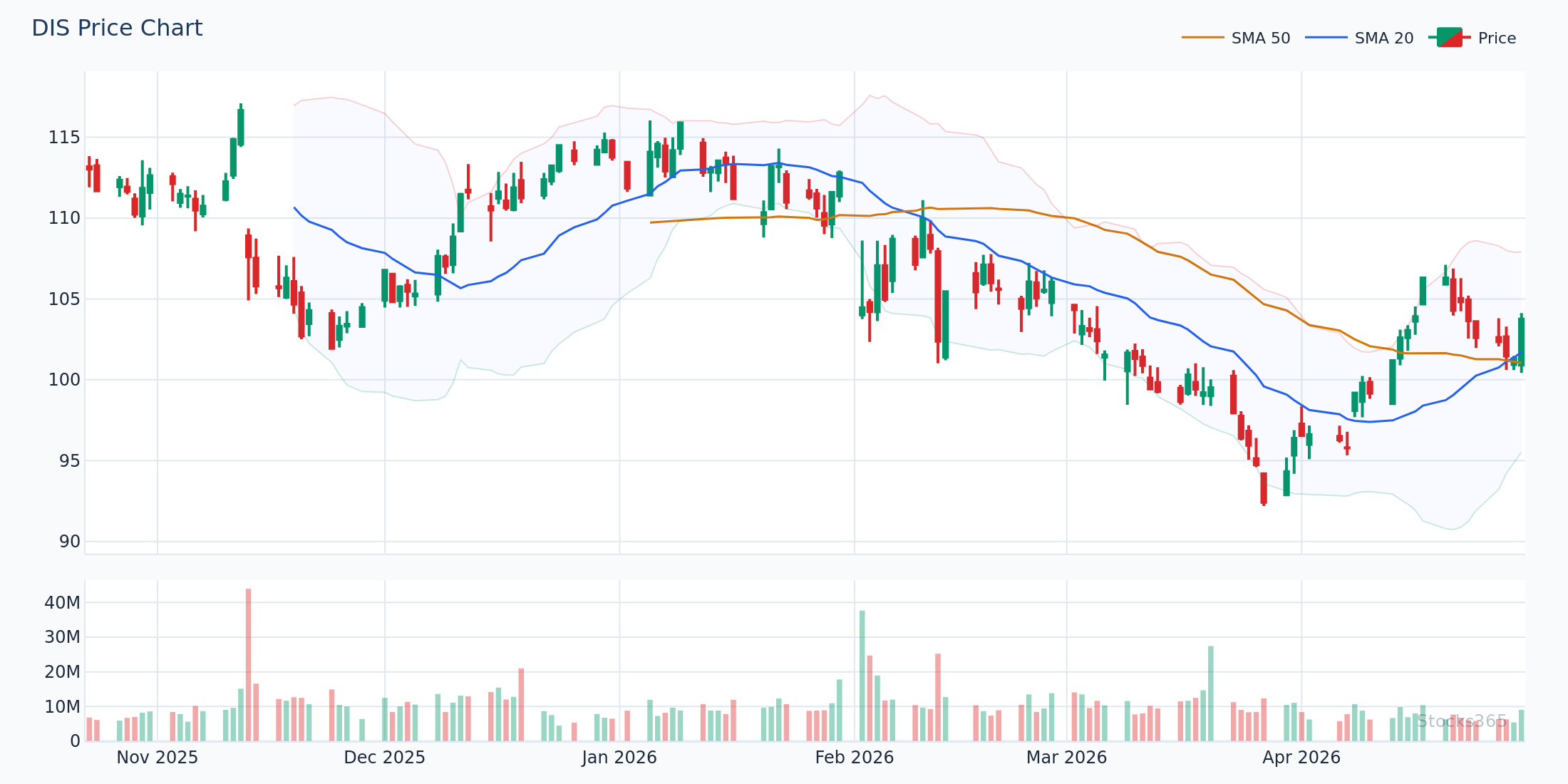
For an EV maker whose path to profitability has rested almost entirely on demonstrating it can manufacture at scale without hemorrhaging cash per unit, those targets represent the clearest articulation of the bull case Rivian has ever put on paper. Employee deliveries have begun. Customer deliveries are slated for this spring. The R2 is aimed squarely at the five-passenger SUV and crossover segment — the highest-volume category in the American automotive market. Scaringe explicitly framed R2 as bringing Rivian's design and technology to "a significantly broader audience."
Stocks365 data shows RIVN trading in a normal-volatility regime heading into the print. Our proprietary VWAP Mean Reversion Long strategy — which carries a 53.6% win rate is a signal, not a guarantee. The forward catalyst is concrete: first customer R2 deliveries this spring will be the first live test of whether the cost math holds at volume.
The cautious read is equally straightforward. Projected cost reductions and actual cost reductions are separated by the reality of a production ramp. Rivian has navigated supply chain disruptions before — and the company's own Q1 call referenced ongoing supply chain challenges as a live risk category. Bill-of-materials estimates built before full-scale production begins have a history of revision in both directions. As our earlier note on the macro read embedded in Tuesday's earnings batch flagged, the gap between guidance language and delivered numbers is the widest it has been in several quarters.
Healthcare's Mixed Signals: Baxter Holds Guidance While T. Rowe Flags the Iran Energy Shock
Baxter's Q1 2026 call delivered a reiterated full-year 2026 outlook — neither an upgrade nor a cut — but the language surrounding it is worth parsing carefully. Management flagged ongoing supply chain challenges and the estimated impact of tariffs and broader inflationary pressures as live variables. The company is reporting on a continuing-operations basis that excludes its Kidney Care business, now classified as discontinued operations following the Vantive separation. Organic growth — which strips foreign exchange, MSA revenues from Vantive, and acquisition or divestiture impacts — is the operative metric for comparing performance period over period, per the company's Q1 filing framework.
The reiteration of guidance in the current tariff environment is itself a data point. Companies with significant supply chain exposure have been revising estimates in both directions this quarter; holding the line signals either genuine operational insulation or a management team that hasn't yet fully modeled the second-order effects. Baxter's infusion pump platform carries its own regulatory overhang — explicitly called out as a risk in Thursday's call — which adds another variable layer independent of the macro backdrop.
Labcorp updated its full-year 2026 financial guidance during Thursday's webcast without specifying the revised figures in the portion of the transcript available. Chairman and CEO Adam Schechter and CFO Julia Wang framed the update around capital allocation strategy alongside the guidance revision. Labcorp's organic growth definition — excluding acquisitions, divestitures, currency, and other strategic actions taken in its early development business — is narrower than most peers, which means reported numbers require adjustment before any apples-to-apples comparison with sector comps.
OrthoPediatrics offers a cleaner signal. The record 45,000 children treated in Q1 2026 is the company's lead metric — CEO David R. Bailey opened the call with patient impact before financial results, a sequencing choice that tells you something about how management wants the story framed. The 10-K filed on March 4, 2026 per SEC records is the baseline document; Q1 results layer on top of that foundation.

T. Rowe's Active-Management Performance Data Cuts Both Ways
T. Rowe Price's Q1 call introduced a macro element that no other Thursday print addressed directly: the Iran conflict pushed energy prices sharply higher in March, generating equity-market declines that have since reversed in early Q2 — with markets reaching new highs per management's characterization during the call. CEO Robert Sharps framed this as an environment where active management and fundamental research carry structural advantage. The performance data is the stress test of that claim.
On an asset-weighted basis, 71% of T. Rowe's long-term funds outperformed their benchmarks on a three-year basis, and 78% outperformed on a ten-year basis, per the Q1 call. Fixed income delivered particularly strong results — over three-quarters of funds outperformed on an asset-weighted basis across the one-, three-, five- and ten-year time horizons. Target date fund performance showed 94% of AUM outperforming peers on a three-year basis and 98% on a ten-year basis.
The one-year numbers are where the bull case gets complicated. Only 21% of equity fund assets outperformed on a one-year asset-weighted basis. The target date franchise one-year figure was 8% of AUM outperforming. Management acknowledged the one-year period remains "challenged" — a word that does real work in that sentence. T. Rowe also disclosed continued outflows in equity and mutual fund businesses, though it characterized teams as making progress in stabilizing flows. That tension — strong long-horizon track record, weak near-term results, ongoing outflows — is the defining data paradox for active managers navigating a market environment that has rewarded passive exposure.
This dynamic has a historical anchor: active equity managers faced a structurally similar one-year underperformance window in 2018, when factor rotations compressed the alpha generation capacity of fundamental stock-picking strategies during the late-cycle volatility episode. T. Rowe navigated that period and long-horizon numbers ultimately reasserted — but the recovery took multiple quarters, not weeks. The question for Q2 is whether the Iran-driven volatility that Sharps flagged represents a catalyst for active strategies to re-establish one-year relevance, or whether the subsequent rally to new highs simply reinforces passive beta.
Context from our rate-spread analysis earlier this week is worth threading in here: when equity markets reach new highs concurrent with energy-price uncertainty, the spread between asset-manager revenue — which is AUM-fee-linked and therefore market-level-sensitive — and underlying flow health tends to widen. A rising market flatters AUM without necessarily reversing outflows. That distinction matters for TROW's Q2 setup.
The Forward Setup: R2 Deliveries, Baxter's Pump Platform, and Whether the Iran Reversal Holds
Three specific catalysts are worth tracking when markets reopen Friday and into next week. First, any data point on Rivian's R2 customer delivery cadence — even anecdotal — will begin calibrating whether the spring delivery timeline holds and whether demand at the price point is tracking management's expectations. The company has started employee deliveries; the first verifiable customer delivery report will be the first real-world test of the R2 thesis at these levels.
Second, Baxter's infusion pump regulatory trajectory. The call explicitly named the infusion pump platform as a forward-looking risk variable. Any FDA communication or regulatory filing update in the coming weeks would move the continuing-operations earnings model in a direction that the reiterated guidance hasn't priced. Watch the SEC filing cadence on EDGAR for any interim disclosures.
Third — and most macro in its implications — is whether the early-Q2 market recovery that T. Rowe Price's management described as reaching new highs continues to hold. If the Iran energy-price shock was a one-month episode rather than a regime shift, asset managers with AUM-linked fee structures benefit immediately from a higher market floor. If energy prices re-accelerate in May, the Iran narrative isn't resolved — it's deferred. The read-through to TROW and similarly structured active managers is direct and arithmetic: higher AUM equals higher base fees, full stop.
Five earnings calls in one evening rarely produce a single unified signal — and Thursday didn't. What they produced is a clear bifurcation. Rivian's cost-reduction math, if it holds, represents one of the more credible near-term profitability inflection stories in the EV space. The healthcare prints — Baxter holding guidance under tariff pressure, Labcorp updating its outlook, OrthoPediatrics posting record patient numbers — suggest the sector is absorbing macro headwinds rather than being derailed by them. T. Rowe's data cuts to the core tension in active asset management: long-horizon credibility is intact; near-term performance and flows are not. As this week's broader earnings tape has repeatedly shown, the spread between companies navigating cost structures successfully and those still absorbing them is the defining trade of this reporting season. Thursday evening added five more data points to that argument — and didn't resolve it.