War Premiums and Trading Windfalls: Shell Cashes In on Middle East Chaos
The global energy market is caught in the crossfire of geopolitical upheaval — and Shell (SHEL) is emerging as one of the unlikely financial beneficiaries. The oil major's trading division is poised for a standout first quarter, with company earnings expected to soar to between $200 million and $700 million, according to reporting by The Guardian.
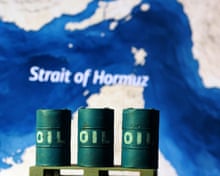
The surge is being driven in large part by the ongoing conflict involving Iran, which has injected significant volatility and risk premiums into global oil markets — conditions that sophisticated commodity trading operations, like Shell's, are well-positioned to exploit.
Iran War Fuels Oil Trading Bonanza
When geopolitical tensions spike in oil-rich regions, energy traders tend to profit. Supply disruption fears push prices and volatility higher, creating wider spreads and more arbitrage opportunities for companies with the scale and infrastructure to move crude around the world at speed.
Shell's trading arm is one of the most powerful in the industry, giving the company a meaningful edge when markets turn turbulent. The Iran conflict appears to have done exactly that — delivering a jolt of uncertainty that traders have been able to monetise across the quarter.
This kind of earnings contribution from trading desks can be difficult to predict and is often excluded from analysts' core models, which means the actual headline numbers when Shell formally reports could catch some on Wall Street off guard.
Qatar Strikes Cloud the Gas Picture
Not all the news is positive, however. While oil trading has flourished, Shell (SHEL) has also been contending with a separate headwind: strikes in Qatar that have weighed on gas output, as reported by The Guardian.
Qatar is one of the world's most significant liquefied natural gas producers, and any disruption to output there carries consequences for global LNG supply chains — and for companies like Shell that are deeply embedded in that market. Shell's exposure to Qatari gas operations means the labour unrest represents a meaningful operational drag, even as the oil side of the business booms.
The contrast between these two dynamics — soaring oil trading profits on one hand, constrained gas production on the other — paints a complex picture for investors heading into earnings season.
What This Means for Energy Markets
The interplay between conflict, commodities, and corporate earnings is rarely straightforward, but a few things are becoming clear:
- Geopolitical risk is back as a major market driver. The Iran conflict is not just a headline — it is moving prices and reshaping supply expectations in real time.
- Energy trading desks are outperforming. Companies with large, agile trading operations are better insulated from operational disruptions and can turn volatility into profit.
- Gas markets face their own pressures. The Qatar situation is a reminder that the global LNG market remains vulnerable to localised disruptions, with ripple effects felt far beyond the region.
For broader energy equities, Shell's expected trading windfall could serve as a signal that other integrated majors with active trading books may also report stronger-than-expected first-quarter results — even if their upstream production numbers tell a more complicated story.
What Traders Should Watch
Ahead of Shell's formal earnings release, there are several key variables worth monitoring closely. First, the trajectory of the Iran conflict will remain the single biggest swing factor for oil market sentiment. Any escalation or de-escalation could dramatically alter the trading environment that has benefited Shell this quarter.
Second, the situation in Qatar deserves attention. If the strikes drag on or intensify, the drag on gas output could become a more significant headwind that offsets some of the trading gains.
Third, watch for how analysts adjust their models. Trading income is notoriously hard to forecast, and a result at the top end of the $200 million to $700 million range would likely prompt meaningful upward revisions to full-year estimates — which could act as a near-term catalyst for Shell (SHEL) shares.
More broadly, energy sector traders should keep a close eye on the relationship between geopolitical developments and commodity volatility. When that volatility is elevated, integrated majors with trading operations historically tend to outperform pure-play producers.
The Bigger Picture for Energy Investors
Shell's situation encapsulates the broader tension defining energy markets right now: extraordinary short-term trading opportunities generated by conflict and disruption, set against the backdrop of operational challenges that could limit longer-term production growth.
For investors, the question is whether the trading windfall is repeatable or whether it represents a one-off quarter driven by exceptional circumstances. Energy companies are not immune to the normalisation of volatility — and if the Iran situation stabilises, the trading tailwind could fade as quickly as it appeared.
Meanwhile, the gas side of the equation will need watching. LNG has been a strategic pillar of Shell's long-term growth story, and sustained disruptions to Qatar output could prompt analysts to revisit assumptions about the company's production trajectory.
Stocks365 Take
This is an earnings story with a geopolitical engine, and that combination demands careful positioning. Shell (SHEL) is sitting in a sweet spot right now — war-driven oil volatility is padding its trading book in a way that fundamental analysts often underestimate. That $700 million top-end figure is not a guarantee, but even a result in the middle of that range would represent a meaningful beat relative to consensus expectations.
Our signals are flagging Shell (SHEL) as a name to watch closely into earnings. If the company prints at the higher end of guidance, we would expect a positive price reaction — particularly given how much uncertainty surrounds energy names right now. However, traders should be aware that the Qatar gas disruption introduces downside risk that could temper enthusiasm, especially among investors who are long on Shell's LNG growth story.
For those using our platform's signal system, watch for momentum confirmation signals on Shell (SHEL) as the earnings date approaches. A strong trading beat could also serve as a read-through for other integrated energy majors. The broader energy sector trade here is clear: elevated geopolitical risk equals elevated trading profits for those with the infrastructure to capture it — and right now, Shell has exactly that.
