

ZipRecruiter (ZIP) delivered $107.5 million in Q1 revenue, beating the midpoint of its own guidance, while adjusted EBITDA came in at $9.7 million — above the high end of the guided range. That's the kind of print where the bull and the bear can both find something to grab onto, and tonight that's exactly what's happening.
MP Materials (MP) reported $114.5 million of materials segment revenue and PPA income, approximately double the prior-year first quarter. Dropbox (DBX) posted year-over-year revenue growth of 2% excluding FormSwift, exceeded the high end of guidance on both revenue and operating margin, and reported an unlevered free cash flow margin of 38%. Three names, three different industries, one quiet Thursday evening to sort through what they mean before Friday's open.
The macro backdrop isn't exactly generous cover. The and the , leaving a — a curve that's steepening slowly but hasn't yet made up its mind about where growth is heading. The Fed held rates steady at its April 29 meeting, with the effective funds rate running at . That's the floor these companies are operating against. It matters more for some than others.
ZipRecruiter's Revenue Beat Doesn't Erase the Labor Market Overhang
The beat is real. ZIP topped guidance on both revenue and adjusted EBITDA, and CEO Ian Siegel framed the quarter around what the company calls "active matchmaking" — driving direct, meaningful conversations between employers and job seekers as a core R&D focus. That's a coherent product story for a difficult environment.
But ZIP's net loss was $4.7 million. Positive. The adjusted EBITDA number, $9.7 million, is above the ceiling they set for themselves — and that's worth crediting. In a labor market where hiring volumes have been erratic, clearing your own high-end target is a clean result. The setup here is that ZIP is running leaner and still generating enough adjusted profitability to keep the narrative alive.
The cautious read is harder to dismiss. Adjusted EBITDA of $9.7 million on $107.5 million in revenue is a margin of roughly 9%. That's not the margin profile of a business with pricing power — it's the margin of one still finding its footing. The jobs market has been bifurcated: white-collar hiring has softened unevenly, and platforms that serve broad employer demand are feeling it. ZIP is positioning around AI-assisted matching as its differentiation, but that story requires execution quarters, not just a single beat-and-raise.
The historical anchor here is 2023, when several HR-tech platforms posted beat-and-lower quarters as job postings volumes peaked and then rolled. ZIP avoided that tonight — but the guidance question is what traders will be pricing at the open tomorrow. If the Q2 outlook is cautious, the beat means less than the headline suggests.
Unlikely that one clean quarter resolves the structural debate about online job-board durability. Watch what management says about Q2 employer demand in the recorded Q&A — that's the variable that will move the stock.
MP Materials' Record NdPr Output Is the Strongest Print of the Three
917 metric tons of NdPr oxide in Q1 — that's a record, and it came in 63% above the prior year and 28% above Q4. Total NdPr oxide sales reached 1,006 metric tons, more than double year-ago levels. Materials segment adjusted EBITDA was $36.7 million. These are not soft numbers dressed up with non-GAAP adjustments. These are physical volumes moving out the door to paying customers.
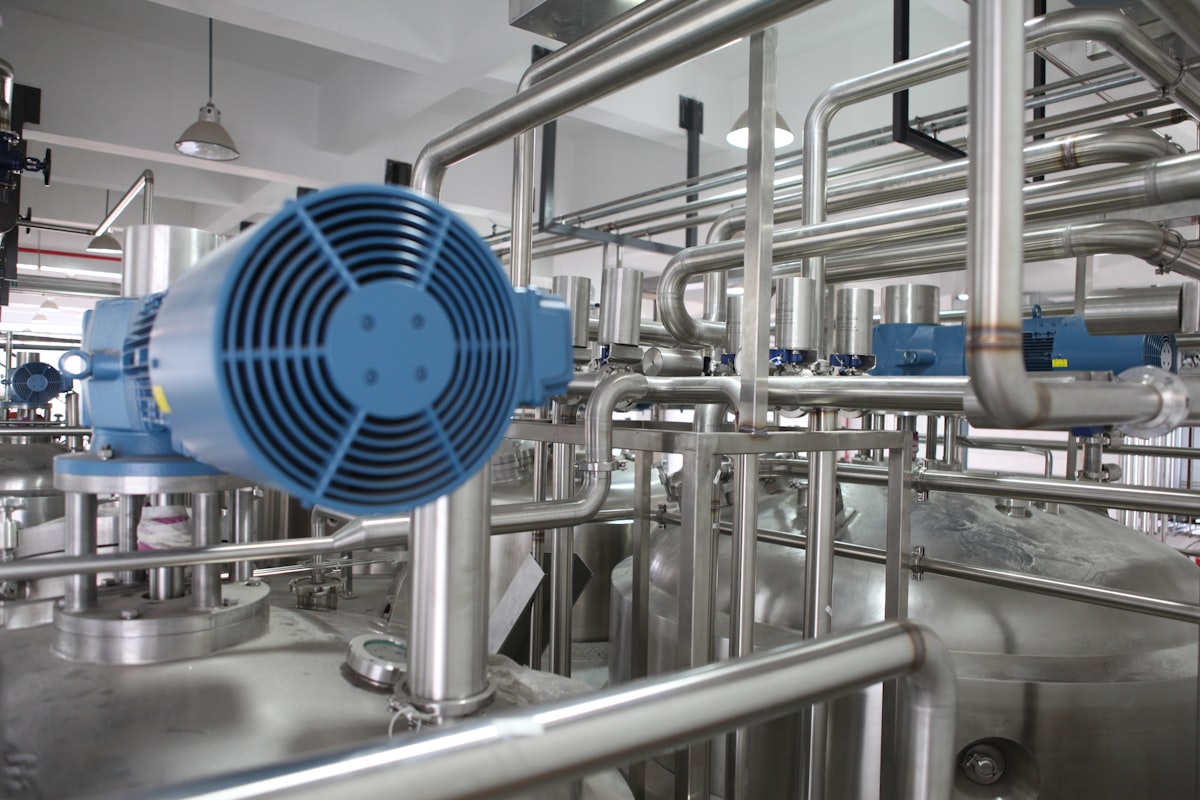
The company also began initial shipments to a new U.S. customer referenced last quarter, which drove that sales jump. Chairman and CEO James Litinsky flagged continued progress on the heavy rare earth separation circuit, expected to begin commissioning in Q2. That's a near-term catalyst with a defined timeline — not a vague roadmap item. And the company is advancing engineering design on its recycling circuit tied to its Apple agreement, which adds a closed-loop supply chain angle that most rare earth producers don't have.
The magnetics division is still in ramp mode, working through customer validation ahead of full production. That's the part of the business that doesn't yet move the revenue needle — but it's also where the long-term margin story lives. Magnetic components carry far more value than raw concentrate. The 10x expansion project has broken ground. That's a multi-year buildout, not a Q2 trade.
The bear case on MP is real and worth sitting with. Rare earth pricing is notoriously volatile, and the company's revenue improvement was driven partly by improved market pricing alongside the Power Purchase Agreement income. If pricing softens — and rare earth markets have a history of sharp reversals — the volume growth gets partially offset. The last significant pricing dislocation in rare earths came in late 2022, when NdPr oxide prices fell sharply from their post-pandemic highs. MP wasn't fully ramped then. It is now, which means greater revenue exposure in both directions.
Still, between the three prints tonight, MP's fundamental momentum looks the most durable. Record production, doubling revenue, a customer relationship with Apple, and a specific Q2 commissioning event on the heavy rare earth circuit. That's a concentrated set of catalysts. Last night's broader earnings sweep showed that physical-world businesses with genuine volume growth are getting more credit than platform businesses with flat-to-declining top lines. MP fits that pattern cleanly.
Notable.
Dropbox Is Bending Its Own Curve — Slowly, and That's the Point
Dropbox reported 2% year-over-year revenue growth excluding FormSwift, which is not a number that generates excitement in isolation. But context matters. CEO Drew Houston said on the call that the goal in the core business is not just to maintain it — it's to bend the curve back toward sustainable growth. The Q1 data suggests they're doing exactly that, at a measured pace.

The specifics are what make this credible. Mobile churn rate fell mid-single-digit percentage points after targeted retention interventions, including improvements to mobile prompts and loss-aversion messaging. Among Basic users targeted with storage upgrade promotions, conversion improved 50%. Those are conversion-rate metrics, not vanity engagement numbers. They translate directly into retained ARR and incremental revenue. The mega-cap earnings split we tracked in late April showed that product-led retention plays are getting more investor credit than pure AI feature announcements — Dropbox is leaning into exactly that playbook.
The unlevered free cash flow margin of 38% is the number that keeps the thesis alive for value-oriented holders. DBX has been generating substantial cash even as revenue growth has stalled. The question was always whether management could stabilize the decline before the cash flow story stopped compensating for it. Q1 suggests the stabilization effort is working — the Teams business saw practical funnel improvements described as driving meaningful results, including pricing and packaging progress.
The bear case is that 2% growth is still 2% growth. This is not a business re-accelerating — it's a business stopping the bleed. The competitive environment for cloud storage and collaboration hasn't softened. Microsoft's bundle keeps pulling SMB customers, and the AI-native productivity tools are encroaching on workflows that Dropbox used to own by default. DBX leadership's confidence in Ashraf Alkarmi, hired in 2024 to lead the core business, sounds genuine. But institutional investors have heard turnaround confidence before, and they weight the evidence over the sentiment.
Is the 38% free cash flow margin enough to keep positioning intact if Q2 revenue growth doesn't tick up? That's the question Thursday night's tape is sitting with. The answer depends entirely on the forward guide and what management signals about the pace of Teams recovery.
What Traders Should Be Watching When the Open Hits
Of the three, MP Materials carries the cleanest near-term setup. Record production volumes, a doubling of materials revenue, and a Q2 commissioning catalyst are the kind of hard data points that give positioning a defined anchor. The 10-year yield at 4.36% is a headwind for growth multiples broadly, but MP's story is fundamentally about physical output and contract revenue — less rate-sensitive than platform software.
ZipRecruiter's beat is real, but the stock's trajectory at the open will be determined by Q2 guidance tone, not Q1 results. If management signals stable or improving employer demand, the EBITDA outperformance gives the bulls something to work with. If guidance is cautious, the Q1 beat gets faded quickly — that's how HR-tech prints have traded in recent cycles, and there's no reason to expect different behavior here.
Dropbox's risk-reward into Friday is the most balanced of the three. The free cash flow margin and the retention improvements give the stock a floor, but the growth rate alone won't attract fresh institutional rotation. It's a hold-and-monitor situation rather than a fresh-entry setup. As our earlier analysis on the AI earnings euphoria narrative argued, the market is increasingly separating companies with durable cash economics from those with merely impressive top-line growth stories. DBX sits squarely in the former camp — the challenge is that "durable but slow" doesn't command premium multiples in a tape that's still rewarding momentum.
The specific thing to watch at Friday's open: MP's Q2 guidance on NdPr pricing assumptions and the heavy rare earth circuit commissioning timeline. If management provides a defined commissioning window — weeks rather than months — that's an incremental positive the market hasn't fully priced. Rare earth supply chain positioning has geopolitical weight right now that adds a bid to any credible domestic producer. That's the setup worth tracking into the weekend.
Three prints. Three different stories. One of them has much stronger footing than the other two tonight — and it's the one digging ore out of the ground in California, not the ones fighting for screen time on someone's laptop.