
What Is the Volume-Weighted Moving Average (VWMA)?
Most moving averages treat every price bar equally. The volume-weighted moving average (VWMA) doesn't. It weights each price bar by its trading volume — so high-volume candles carry more influence than low-volume ones. The result is a moving average that reflects where real money moved, not just where price happened to be.
That distinction matters. A lot.
When a stock closes higher on massive volume, that move deserves more weight than a quiet drift higher on thin afternoon trading. VWMA captures that. A standard simple moving average (SMA) ignores it entirely.
Stocks365 backtested 662 volume spike signals across multiple asset classes and found a 52.0% win rate with a profit factor of 1.50 over a 10-day holding period — outperforming basic price-only crossover signals. The edge comes from one thing: volume validates price. When you align moving average signals with volume context, noise drops and conviction rises. You can explore the full breakdown on our research dashboard.
The VWMA Formula: How It's Calculated
The math behind VWMA is straightforward. For each bar in your lookback period, multiply the closing price by that bar's volume. Sum all those values. Then divide by the total volume over the same period.
VWMA = Σ (Close × Volume) ÷ Σ Volume
Compare that to a simple moving average, which just averages closing prices with equal weight. The VWMA pulls toward the price levels where the most trading activity occurred. In trending markets, VWMA slopes more aggressively in the trend direction because big institutional moves generate big volume — and big volume moves the average.
In ranging markets, VWMA and SMA tend to converge. When they diverge, pay attention.
VWMA vs. SMA: Why the Difference Matters
The gap between VWMA and a same-period SMA is where your signal lives.
- VWMA above SMA: Recent high-volume bars closed above the average — buyers were active and committed. Bullish bias.
- VWMA below SMA: Recent high-volume bars closed below the average — sellers dominated when it counted. Bearish bias.
- VWMA and SMA converging: Volume was evenly distributed. No strong institutional directional bias. Avoid breakout trades in this environment.
This spread is a volume sentiment indicator in its own right. Even before price confirms a move, the VWMA/SMA gap often telegraphs which side has conviction.
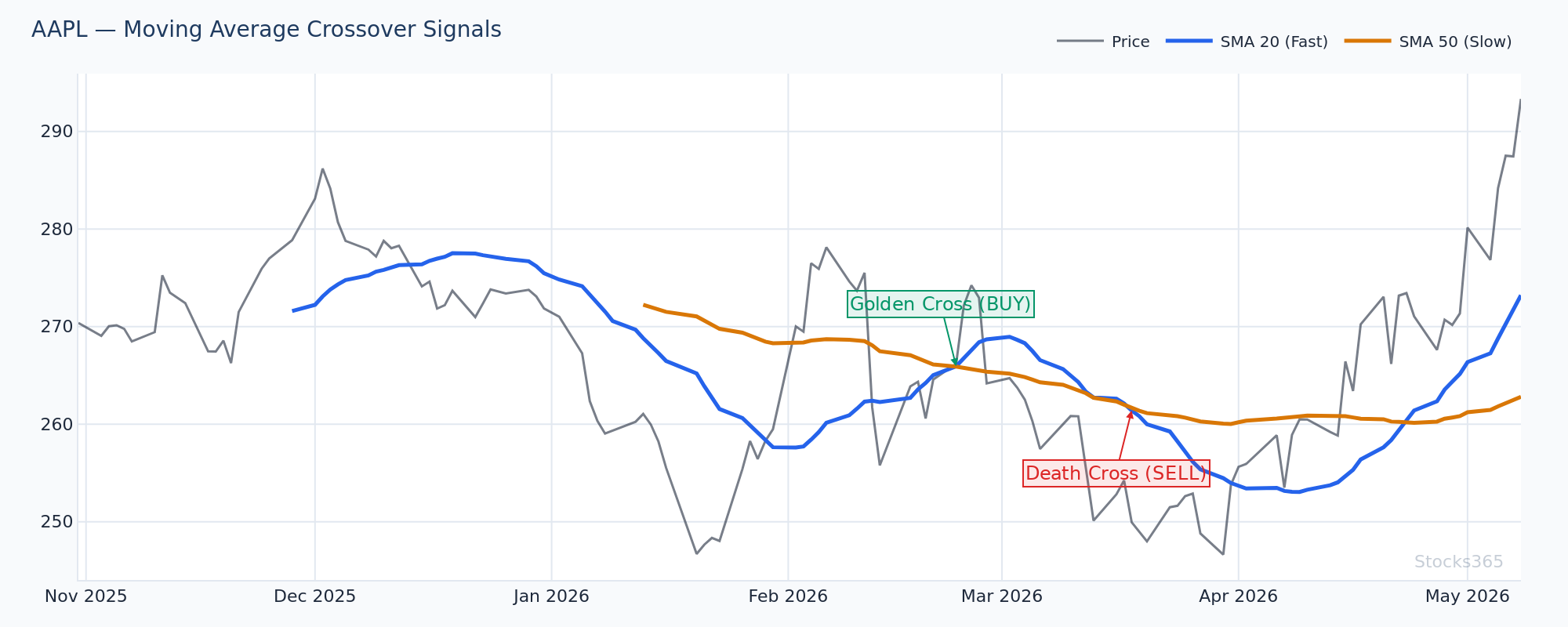
This chart shows a period where VWMA crossed above the same-period SMA as volume expanded on bullish candles. When VWMA leads SMA higher with widening separation, the trend typically accelerates before the next consolidation. The setup is invalidated if price closes back below both averages on above-average volume — that signals the institutional bid has withdrawn.
How to Use VWMA in Your Trading Strategy
1. VWMA as Dynamic Support and Resistance
In a strong uptrend, price repeatedly pulls back to the VWMA and bounces. This isn't coincidence. Institutional algorithms often use volume-weighted levels as entry zones during retracements. When price tags the VWMA during a pullback and volume contracts — then expands again on the recovery candle — that's a textbook continuation setup.
The entry trigger: price touches the VWMA, a reversal candle forms (hammer, bullish engulfing), and volume on the recovery bar exceeds the volume of the pullback bars. That's confluence. That's a trade.
2. VWMA Crossover Signals
The classic application is dual-average crossover: a shorter-period VWMA crossing above or below a longer-period VWMA (or a standard SMA). Common pairings include 10/20, 20/50, and 9/21 setups depending on your timeframe.
Here's what most traders get wrong: they treat every VWMA crossover as an entry signal. In trending markets, that works fine. In choppy, low-volume markets, it produces a string of whipsaws that erodes your account one small loss at a time. The fix is simple — only take VWMA crossover signals when the crossover occurs on above-average volume. A crossover on thin volume is noise. A crossover on a volume surge is a signal worth trading.
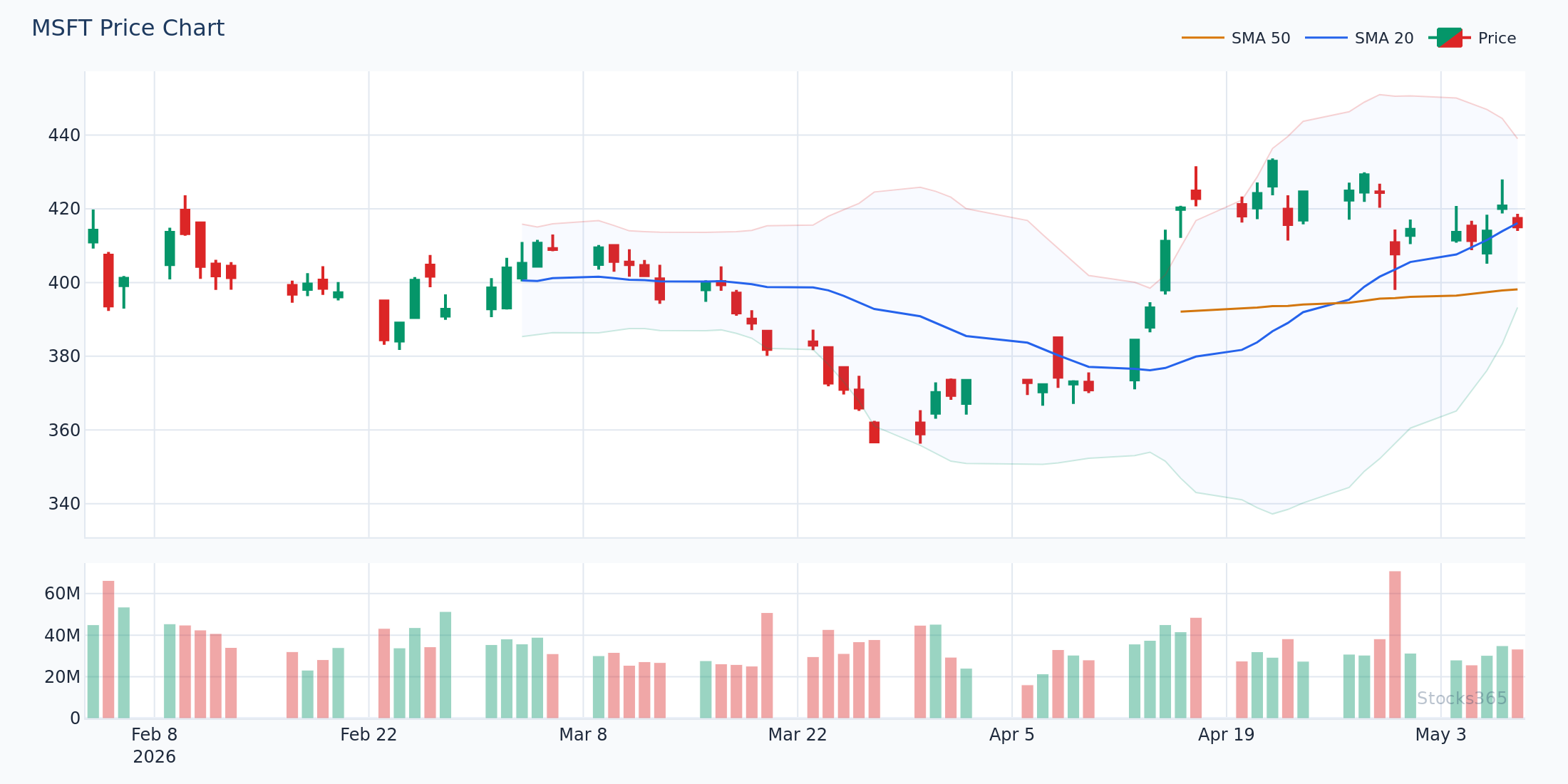
This setup shows a short-term VWMA crossing above a longer-term SMA while volume expands meaningfully above the 20-period average. When the crossover aligns with a volume surge, follow-through in the first 3-5 candles is common. The pattern loses validity if volume immediately collapses after the cross — that indicates the move lacked institutional participation.
3. VWMA Divergence From Price
One of the most powerful — and underused — applications of VWMA is divergence analysis. When price makes a higher high but VWMA makes a lower high (or fails to confirm), the high-volume activity is not backing the new price level. Distribution is happening. Weakness is building beneath the surface.
This mirrors the logic behind momentum divergence tools like RSI. If you're already familiar with RSI overbought and oversold signals, VWMA divergence gives you a volume-based second opinion. When both RSI and VWMA diverge from price simultaneously, the probability of a reversal increases substantially.
4. VWMA in Combination With Other Indicators
VWMA works best as a confirmation tool, not a standalone system. Here are the combinations that add real value:
- VWMA + RSI: Use VWMA to identify trend direction and RSI to time entries. RSI-based entries within a VWMA-confirmed trend dramatically reduce false signals.
- VWMA + MACD: MACD histogram turning positive while price holds above VWMA is a classic momentum continuation signal. The VWMA provides the structural anchor.
- VWMA + Volume Profile: Combining VWMA with volume profile nodes identifies where high-volume price acceptance overlaps with dynamic average support. These zones produce high-probability entries.
- VWMA + Bollinger Bands: When price squeezes inside Bollinger Bands and then breaks out with VWMA sloping in the breakout direction, the move tends to sustain. The VWMA confirms institutional interest behind the breakout.
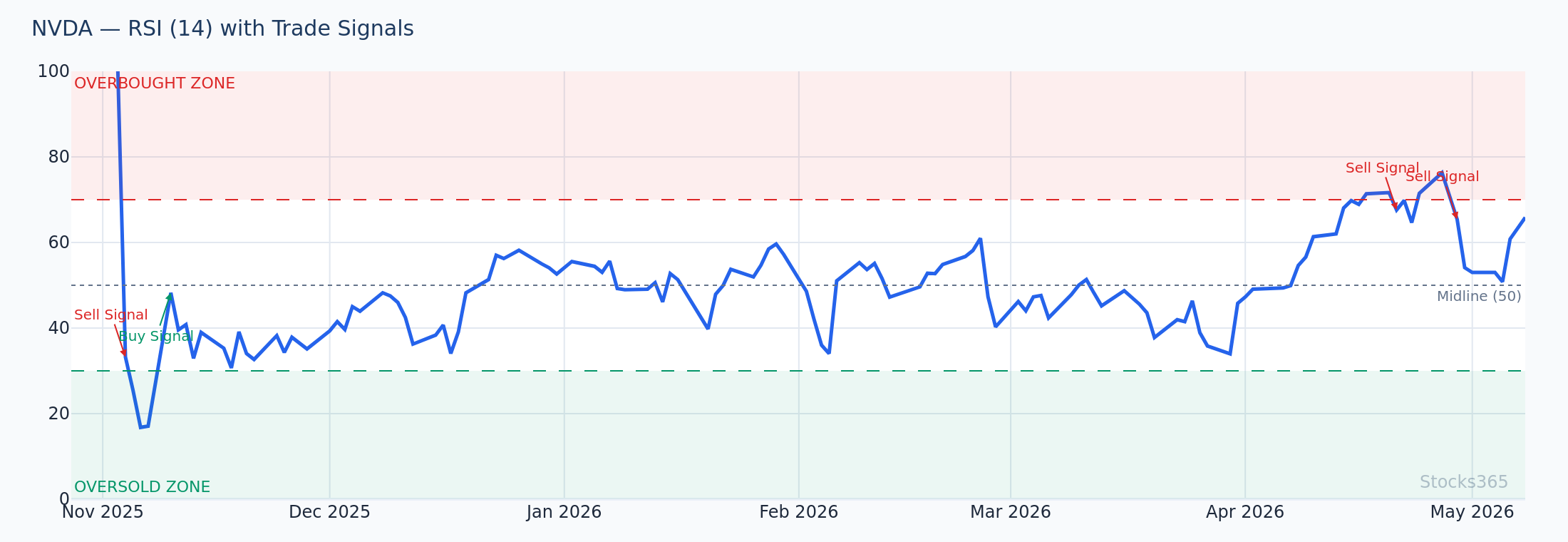
Here NVDA's price holds above a rising VWMA while RSI pulls back from overbought territory toward the 50 level — a classic trend continuation setup. When RSI bounces from the 40-50 zone while price remains above VWMA, that's the reload entry in a healthy uptrend. The setup fails if price closes below the VWMA on elevated volume, suggesting the trend structure has broken.
VWMA Across Different Asset Classes
VWMA behaves differently across markets — and ignoring that costs traders money.
In equities, VWMA is particularly effective around earnings seasons and major index rebalances, when institutional volume spikes are meaningful and directional. Stocks365's backtested data on volume spike signals showed a 51.7% win rate for stocks — respectable, but the real edge comes from filtering those signals with trend context, not trading every spike blindly.
In crypto markets, volume signals behave differently. High-volume moves in crypto often reflect retail capitulation or leverage liquidations rather than institutional accumulation — which means VWMA crosses in crypto require additional confirmation before acting. Raw volume can be misleading in a market where a single exchange can generate outsized volume without corresponding price impact.
Forex presents its own challenge: volume data in FX is tick volume, not true transaction volume. VWMA in forex is less reliable as a result. Directional edges using volume-weighted tools are weaker in that market. That's consistent with research showing volume-based SMA signals perform worst in forex environments.
Setting Up VWMA on Your Charts
Most professional charting platforms — TradingView, Thinkorswim, TradeStation — include VWMA as a built-in indicator. Setup takes under a minute.
- Period selection: For swing trading, a 20-period VWMA on the daily chart is the most widely used setting. For intraday trading, 9 and 21-period VWMAs on the 15-minute or 1-hour chart work well.
- Color coding: Display VWMA in a distinct color from your SMA so the spread is visually obvious at a glance.
- Volume panel: Always keep the volume histogram visible below your price panel when using VWMA. The two are inseparable — VWMA without visible volume context is half the picture.
Pair your VWMA setup with live signals. On Stocks365, the signals dashboard integrates volume-weighted analysis directly into the trust score system, so you're not manually scanning for confluence — the platform does the heavy lifting.
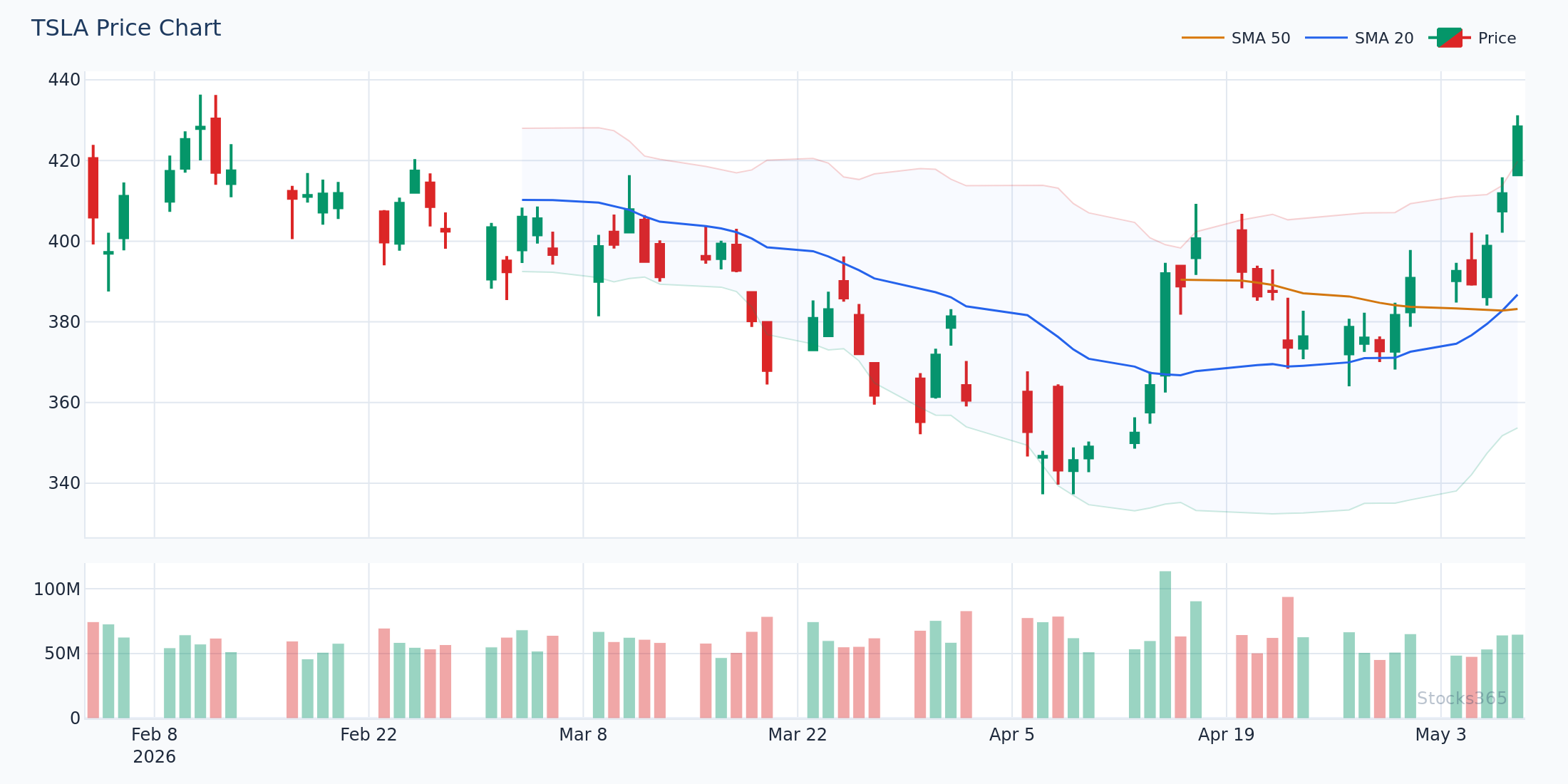
This TSLA chart shows the VWMA acting as dynamic support across multiple pullbacks during a trending phase, with volume contracting on each dip and expanding on each recovery. That volume pattern — low volume on retracements, high volume on advances — is the hallmark of healthy institutional accumulation. The pattern breaks down when a pullback generates volume equal to or greater than the preceding advance.
Common VWMA Mistakes (And How to Fix Them)
Mistake 1: Using VWMA in Low-Volume Markets
VWMA requires meaningful volume variation to provide useful signals. In thinly traded small-cap stocks or during holiday trading sessions, volume is artificially depressed and erratic. The weighting mechanism loses its edge. Stick to liquid instruments with consistent daily volume.
Mistake 2: Treating Every Cross as a Signal
Covered above — but worth repeating. A VWMA/SMA crossover without volume expansion is a low-confidence signal. Filter aggressively. If the crossover bar's volume doesn't exceed the 20-period average volume, wait. Better setups come to those who wait for confirmation.
Mistake 3: Ignoring the Broader Trend
VWMA is a trend-following tool. Trading VWMA signals against the higher-timeframe trend dramatically reduces win rates. Always establish trend direction on the chart one or two timeframes higher before taking signals on your trading timeframe. Trend alignment is the single biggest win-rate driver for moving average strategies.
Mistake 4: Confusing VWMA With VWAP
VWAP (Volume-Weighted Average Price) resets every session and is primarily an intraday tool used by institutional desks to benchmark execution quality. VWMA is a configurable-period indicator that persists across sessions and is used for trend analysis. They serve different purposes. Don't conflate them.
If you want to sharpen your understanding of how momentum indicators like RSI interact with trend tools like VWMA, the RSI trendline strategy guide covers the crossover between momentum and structure in practical detail.
Building a Simple VWMA Trading System
Here's a repeatable framework. No complexity for complexity's sake.
- Step 1 — Define trend: On the daily chart, is price above or below the 20-period VWMA? Above = bullish bias. Below = bearish bias.
- Step 2 — Wait for pullback: In an uptrend, wait for price to pull back toward the VWMA. In a downtrend, wait for a bounce toward the VWMA.
- Step 3 — Confirm with volume: The pullback should occur on declining volume. The reversal candle back in the trend direction should show volume expansion.
- Step 4 — Add momentum confirmation: Confirm with RSI above 50 (in uptrends) or below 50 (in downtrends). See RSI settings guide for optimal period selection.
- Step 5 — Define your invalidation: A close on the opposite side of the VWMA on above-average volume invalidates the setup. Exit cleanly.
Simple. Repeatable. Volume-validated.
Want to see this in action on a specific stock? Check AAPL's live signal page for current VWMA readings and trust score context alongside real-time volume data.
What to Watch For
- VWMA/SMA spread widening on breakouts: When a stock breaks above a key consolidation zone and the VWMA simultaneously diverges above the same-period SMA with expanding volume, the breakout has institutional backing. These are the breakouts that follow through — not the ones that fail back into the range within two sessions.
- VWMA reclaim after failed breakdown: When price briefly closes below the VWMA then snaps back above it on high volume within one or two sessions, this is often a stop-hunt followed by institutional re-accumulation. The failed breakdown followed by a VWMA reclaim is one of the highest-probability long setups in trending markets.
- VWMA flattening in overbought conditions: A rising VWMA that begins to flatten while RSI shows divergence signals that the volume-weighted average is no longer being pulled higher. High-volume sellers are absorbing buying pressure at current levels. Watch for this pattern in large-cap tech stocks after extended runs.
- Volume contraction during VWMA compression: When VWMA and SMA compress together with volume trending below its own 20-period average, a volatility expansion is building. The direction of the eventual VWMA cross — paired with the volume surge that breaks the compression — defines the trade direction.
- Cross-indicator alignment on the daily chart: VWMA trending higher + RSI holding above 50 + MACD histogram positive = three-indicator trend alignment. When all three align, pullback entries to VWMA tend to resolve quickly in the trend direction. If you want to refine your RSI component of this setup, start with these 5 beginner RSI rules.
How Stocks365 Uses This
📊 How Stocks365 Integrates VWMA Into Its Trust Score
Volume-weighted analysis is one of the 12+ indicators feeding into the Stocks365 Trust Score system. When VWMA aligns with price direction and volume confirms the move, the Trust Score's agreement component registers higher confluence across indicators — which translates into stronger signal conviction ratings on the dashboard.
Specifically, Stocks365 tracks the VWMA/SMA spread as a volume regime input: a widening spread in the trend direction increases agreement weighting, while a compressed or diverging spread reduces signal confidence and flags potential regime change. This means that on any live signal — whether you're looking at AAPL or scanning across sectors on the signals dashboard — the trust score already accounts for whether volume is backing the price action. You're not doing that math manually. The platform surfaces it automatically.
Key Takeaways
📌 VWMA Summary
- VWMA weights price by volume, making it more responsive to high-conviction institutional moves than a standard SMA.
- The gap between VWMA and SMA is a volume sentiment indicator — VWMA above SMA signals buyer conviction; below signals seller dominance.
- Only trade VWMA crossovers confirmed by above-average volume. Crossovers on thin volume are noise.
- Combine VWMA with RSI for timing and trend confirmation — the two tools complement each other precisely because they measure different things.
- VWMA is most reliable in liquid equity markets. Apply additional filters in crypto and use with caution in forex where tick volume limitations reduce accuracy.
- The Stocks365 Trust Score integrates VWMA spread analysis automatically — so every signal on the dashboard already reflects volume-weighted trend agreement.