
Moving Average Period Optimization: Finding the Best Setting for Your Strategy
The moving average is the most-used indicator in trading. It's also the most misused.
Every trader drops a 200-day SMA on their chart and calls it a day. But choosing the right moving average period setting is the difference between a strategy that generates edge and one that generates noise. Across 3,332 signals backtested by Stocks365 on the 20-period SMA alone, the win rate on a simple price-cross-below setup sits at just 50.9% — barely above coin-flip territory. That number matters. It tells you that no single period setting is magic. Optimization is everything.
This guide breaks down exactly how to find the best moving average period for your trading style, asset class, and timeframe — using real data, not trading-forum mythology.
What Is a Moving Average Period — and Why Does It Matter?
A moving average period defines how many candles the indicator averages together. Use 10 periods and the line reacts fast — it hugs price action closely. Use 200 periods and it moves slowly, filtering out short-term noise.
The tradeoff is always speed versus reliability.
- Short periods (5–20): React quickly to price changes. More signals, more false positives.
- Medium periods (21–50): Balance between noise filtering and responsiveness. Popular for swing trading.
- Long periods (100–200+): Slow-moving trend filters. Best for identifying macro regimes, not entries.
The period you choose isn't arbitrary — it must align with your holding period, the asset's volatility profile, and the market regime you're trading in. A setting that crushes it in trending crypto markets can destroy a forex account in the same week.
The Most Common Moving Average Periods (and What They're Actually For)
The 9 and 10-Period SMA: Scalping and Intraday
These ultra-short settings are built for speed. Day traders on 1-minute and 5-minute charts use them to catch micro-momentum shifts. They generate signals constantly — too many for most strategies to filter effectively without a secondary confirmation like volume or RSI.
Use these on high-liquidity assets only. On illiquid small-caps or low-volume crypto pairs, they become meaningless.
The 20-Period SMA: The Swing Trader's Baseline
The 20-period SMA is the default for a reason. On daily charts, it approximates one trading month of price action. It's reactive enough to catch swing moves but stable enough to filter single-day spikes.
It's the most tested setting on the Stocks365 platform — and the data is instructive. A price crossing above the 20-SMA produced a 48.3% win rate across 3,289 signals with a 10-day holding period. That's a negative expectancy setup in isolation. The lesson: the 20-SMA cross alone isn't a strategy. It's a component.
Best results on the 20-SMA appear in equities, where price-above-cross reaches a 52.3% win rate. Crypto shows the weakest performance on bullish crosses at just 36.9% — a critical finding if you're building crypto-specific strategies.
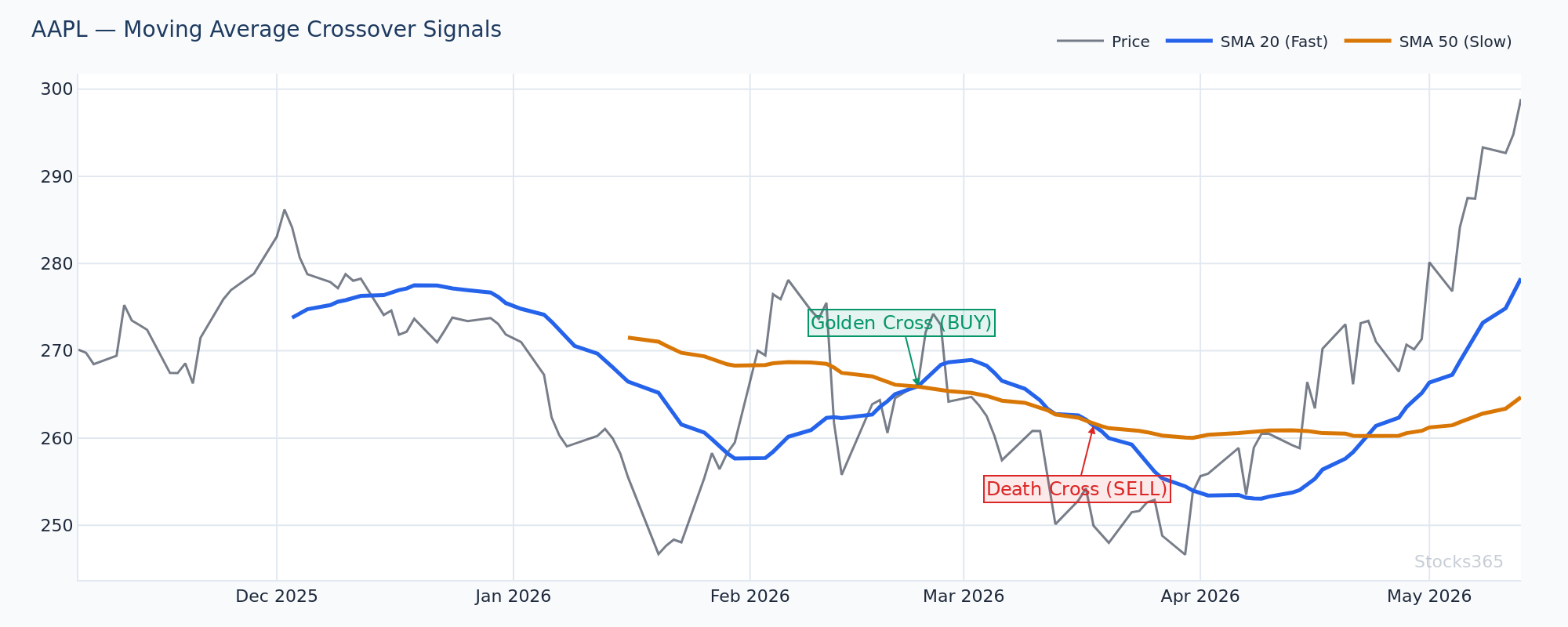
This setup shows price reclaiming the 20-SMA after a pullback, with the SMA itself beginning to slope upward — the classic bullish reload structure. When price holds above the 20-SMA on two consecutive closes and volume expands on the reclaim candle, the setup gains conviction. A close back below the 20-SMA with volume expansion invalidates the move and signals potential continuation lower.
The 50-Period SMA: Institutional Attention Zone
The 50-period SMA on the daily chart gets watched by institutional desks. It roughly represents two and a half months of price action. Breakdowns and reclaims of this level are significant — they often coincide with earnings reactions, sector rotations, and fund rebalancing events.
For swing traders with 2–6 week holding horizons, the 50-SMA is arguably the single most useful moving average period setting. It filters enough daily noise to keep you in strong trends while still triggering during meaningful momentum shifts.
The 100 and 200-Period SMA: Macro Trend Filters
These are regime indicators, not entry signals. The 200-day SMA separates bull and bear market conditions at the macro level. Price above the 200-SMA on a weekly chart tells you the long-term trend is bullish. That's the filter — not the trigger.
Using the 200-SMA for entries on daily charts introduces massive lag. By the time price crosses the 200-SMA, the move is often exhausted. Apply these long-period settings as structural filters, then drop to shorter periods for actual execution.
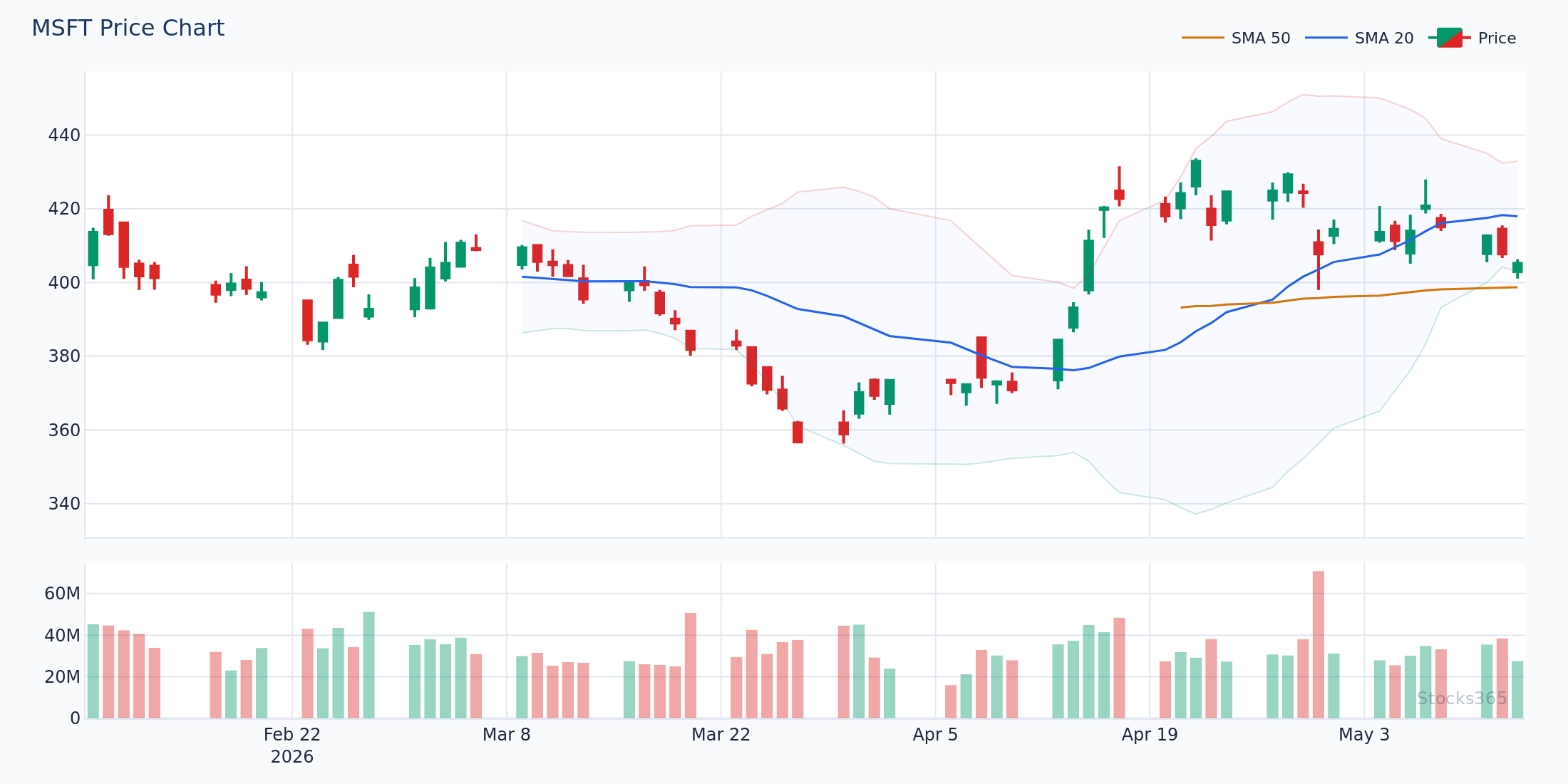
Here the 200-SMA acts as a dynamic support floor during a multi-month trend. Price bouncing off the 200-SMA with a bullish engulfing candle and a RSI reading above 40 is a high-quality continuation signal. The pattern fails if price closes decisively below the 200-SMA on elevated volume — at that point the macro trend regime shifts from bullish to neutral or bearish.
EMA vs. SMA: Which Period Setting Works Better?
This debate fills trading forums. Here's the practical answer: EMAs react faster, SMAs filter better.
The Exponential Moving Average weights recent price data more heavily, making it more responsive to current momentum. The Simple Moving Average weights all periods equally, making it more stable as a structural reference.
For fast-moving assets like crypto and growth tech stocks, the EMA with equivalent periods will catch reversals earlier. For slower-moving instruments like large-cap value stocks or major forex pairs, the SMA's stability reduces whipsaws.
The best moving average period setting isn't just a number — it's a number plus a calculation type. A 21-EMA behaves very differently from a 21-SMA in volatile markets.
Here's What Most Traders Get Wrong About Moving Average Periods
Most traders believe a longer moving average period is automatically more reliable. Wrong. A 200-period SMA isn't more accurate — it's just slower. In a choppy, range-bound market, a 200-SMA gives you no useful signal at all. It just sits flat while price whips back and forth across it, triggering false crosses in both directions.
Period length needs to match market regime. In trending markets, longer periods keep you in trades. In ranging markets, they destroy you with lag. The edge isn't in finding one universal period — it's in knowing which period fits the current environment. That means reading volatility and trend structure first, then selecting your period. Not the other way around.
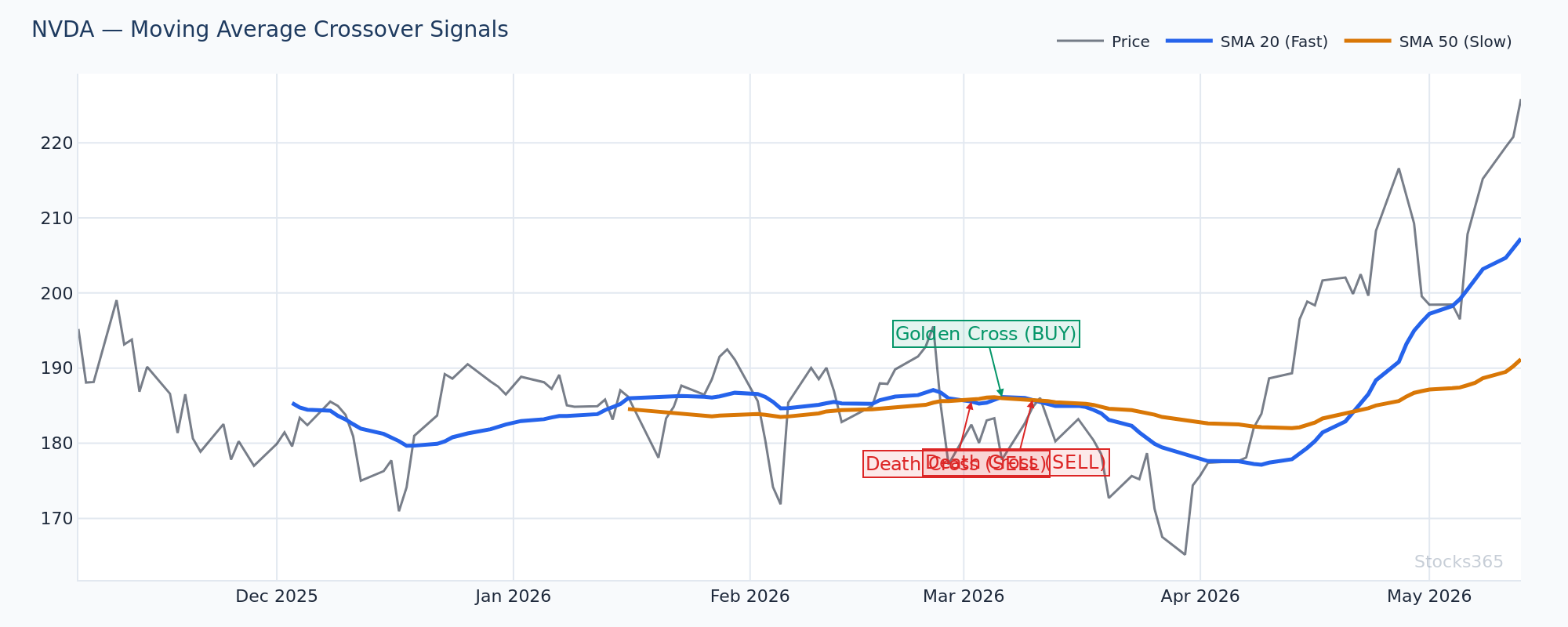
This chart illustrates the divergence between a fast 20-SMA and a medium 50-EMA during a volatile trending phase. When both MAs slope in the same direction and price stays above both, the trend regime is confirmed and holding is rewarded. The setup weakens when price oscillates between the two lines without commitment — that's the chop zone where period optimization matters most.
How to Optimize Moving Average Periods for Different Asset Classes
Equities: The 21 and 50 EMA Combination
For individual stocks on daily charts, the 21-EMA and 50-EMA combination offers an excellent balance. The 21-EMA tracks near-term momentum. The 50-EMA defines the medium-term trend. When both slope upward and price holds above both, the bias is long. Pullbacks to the 21-EMA in an uptrend are high-probability reload zones.
Pair this structure with the triple moving average strategy to add a third layer of trend confirmation — particularly useful in high-beta tech names where false crosses are common.
Forex: Slower Periods, Tighter Filters
Forex is where moving average signals struggle most. Our backtested data shows the 20-SMA price-cross-below setup delivers only a 42.5% win rate in forex — the weakest performance of any asset class. Currency pairs are mean-reverting environments heavily influenced by macro events, making momentum-following MA strategies underperform.
In forex, longer periods (50, 100) used as trend filters combined with shorter-period signals work better. The 20-SMA used standalone for forex entries is statistically a losing strategy. For a deeper look at combining indicators in currency markets, see our guide on MACD in forex trading.
Crypto: High Volatility Demands Adaptive Thinking
Crypto is the most polarized asset class for moving average strategies. The 20-SMA price-cross-below setup actually hits 66.8% win rate in crypto — the strongest result across all asset classes in our backtest. But the bullish cross above the same 20-SMA hits only 36.9% — the worst result.
What does this tell you? In crypto, MA-based short setups have more statistical backing than long setups at the 20-period level. This likely reflects crypto's tendency for sharp, fast selloffs when momentum breaks — the 20-SMA break to the downside carries follow-through. Upside crosses in crypto often occur during recovery bounces in still-bearish regimes, which explains the weak win rate on bullish signals.
For crypto, consider pairing moving average signals with momentum divergence tools. Our RSI divergence guide covers exactly how to use momentum confirmation for higher-probability setups.
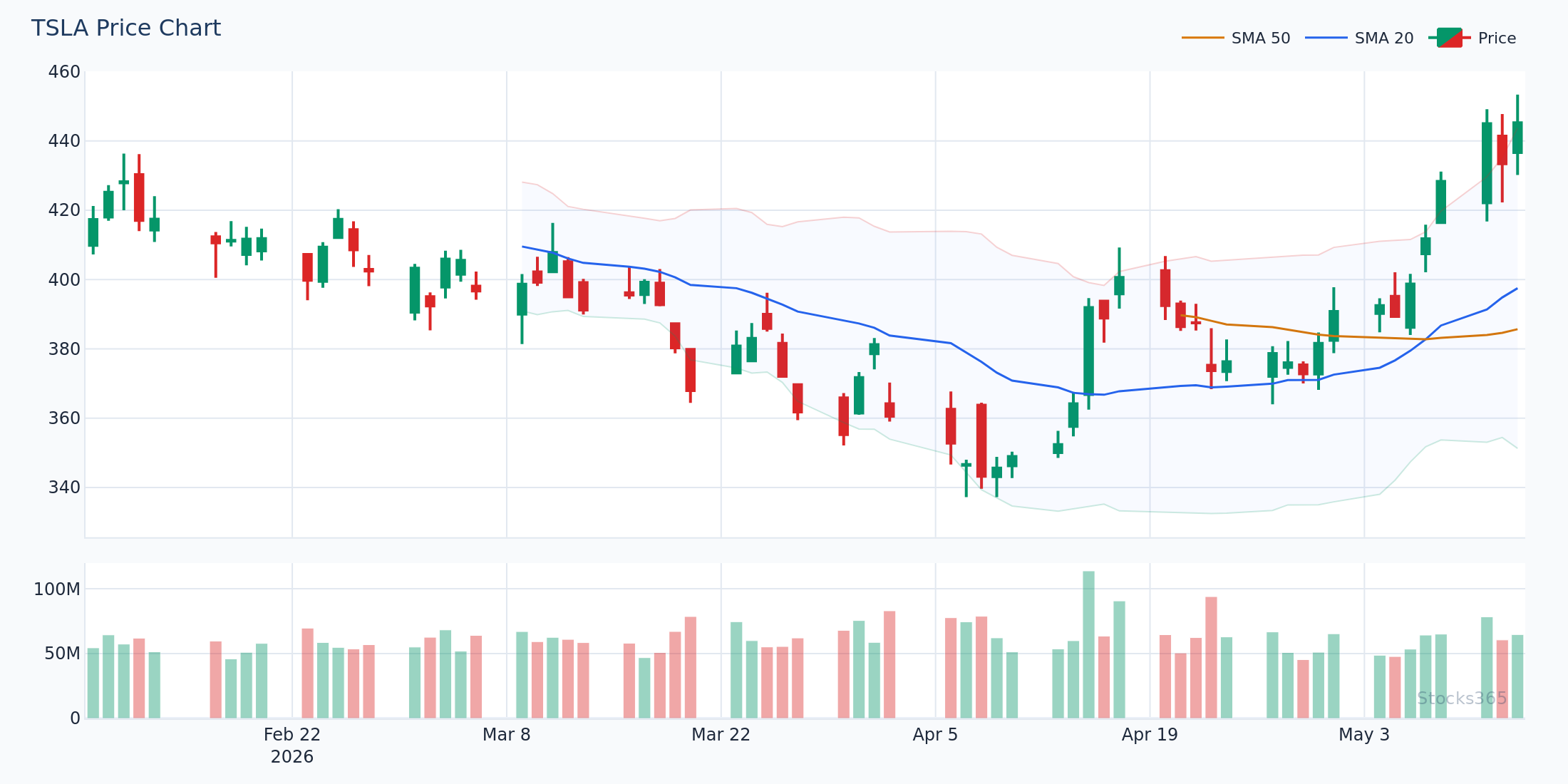
TSLA's volatility profile makes it an ideal case study for period optimization. When price breaks below a rising 20-EMA after an extended run, the move tends to be sharp and fast — confirming that shorter periods work well for catching inflection points in high-beta names. The pattern strengthens when the break is accompanied by a volume spike above the 20-day average, suggesting institutional distribution rather than temporary noise.
Multi-Timeframe Moving Average Period Optimization
Single-timeframe analysis misses the bigger picture. The best moving average period setting for your entry timeframe depends on what the higher timeframe is doing.
A practical framework:
- Weekly chart: 20-SMA as macro trend filter. Above = bullish bias, below = bearish bias.
- Daily chart: 21-EMA and 50-EMA for trend structure and entry zones.
- 4-hour chart: 9-EMA and 20-EMA for momentum confirmation and precise entry timing.
When all three timeframes align — weekly above 20-SMA, daily above 21-EMA, 4-hour pulling back to 9-EMA — the probability of continuation is significantly higher than any single-timeframe setup alone.
This layered approach is what separates professional systematic trading from retail guesswork.
Combining Moving Average Periods With Other Indicators
Moving averages don't work in isolation. The best results come from using them as trend structure tools while other indicators handle momentum, overbought/oversold conditions, and signal timing.
The most effective combinations include:
- MA + RSI: Use the MA to define trend direction, RSI to time entries. A pullback to the 21-EMA with RSI hitting 40-45 in an uptrend is a textbook reload setup. See how to optimize RSI periods alongside your MA settings in our guide to RSI settings.
- MA + Volume: A price reclaim of the 50-SMA on above-average volume carries far more weight than a low-volume drift back above it.
- MA + RSI Trendlines: When price holds above the 20-SMA and RSI breaks above a descending trendline, the combination signals a high-conviction momentum shift. The RSI trendline strategy pairs exceptionally well with MA period analysis.
Never use a moving average cross as a standalone signal. It's a filter. Treat it like one.
Dynamic vs. Fixed Period Settings: Adaptive Moving Averages
Fixed-period moving averages have one critical flaw: they behave identically in trending and ranging markets. Adaptive moving averages solve this.
The Kaufman Adaptive Moving Average (KAMA) and the Variable Index Dynamic Average (VIDYA) automatically adjust their effective period based on market volatility. When volatility is high and trending, they shorten their effective period for faster response. When markets chop, they lengthen to filter noise.
For traders who want optimization without constant manual adjustment, adaptive MAs are worth studying. They don't replace the need to understand period optimization — they extend it.
Backtesting Your Moving Average Period Settings
Intuition is not a backtest. Every period setting needs data behind it before you risk capital.
When backtesting moving average periods, track these metrics:
- Win rate: What percentage of signals resulted in profitable outcomes over your target holding period?
- Profit factor: Total gross profit divided by total gross loss. Above 1.5 is solid. Below 1.0 means you're losing money overall.
- Signal frequency: Shorter periods generate more signals. More signals mean more transaction costs and more decisions.
- Drawdown: How deep do losing runs go? A high win rate with massive drawdowns is not a good strategy.
- Asset-class specificity: Results from stocks rarely transfer cleanly to crypto or forex. Test each separately.
Our research dashboard provides aggregated backtested performance data across thousands of signals so you can benchmark your own strategy results against real statistical baselines — not forum anecdotes.
You can also explore live signal performance on individual names like AAPL signals to see how moving average-based setups are performing in current market conditions.
What to Watch For
- 20-SMA reclaim with slope change: When price breaks back above a declining 20-SMA that then begins to flatten and turn upward, this slope shift is more powerful than the cross itself. Watch for this pattern on daily charts after a multi-week pullback — it often marks the start of the next trending leg.
- 50-SMA compression with volume contraction: When price coils tightly around the 50-SMA over 10–15 sessions and volume drops to multi-month lows, the subsequent expansion move tends to be directional and strong. The 50-SMA acts as the pivot axis for the breakout.
- MA period divergence on crypto: When the 20-EMA crosses below the 50-EMA on the daily chart while RSI remains below 50, the bearish MA cross setup has historically shown strong follow-through in crypto — consistent with the 66.8% win rate on downside 20-SMA breaks we've documented.
- Triple MA alignment after earnings gaps: When a stock gaps on earnings and all three MAs (20, 50, 200) slope upward on the daily chart post-gap, pullbacks to the 20-EMA in the following 2–3 weeks are high-probability entries for continuation. The key confirmation is RSI holding above 50 during the pullback.
- Cross failure patterns: A price cross above the 20-SMA that immediately reverses back below within 1–2 candles — the failed cross — is a bearish signal stronger than a clean breakdown. Retail buyers got trapped on the false breakout. Watch for this pattern especially in forex and crypto, where failed crosses precede fast moves lower.
How Stocks365 Uses This
Moving Average Period Analysis in the Stocks365 Trust Score System
Stocks365 integrates moving average period analysis directly into its multi-indicator Trust Score system. The platform evaluates price position relative to multiple MA periods simultaneously — including the 20, 50, and 200-period SMAs and EMAs — as part of the trend regime scoring component. When price structure, MA alignment, and slope direction all agree across timeframes, the Trust Score reflects higher confluence. Conversely, when MAs conflict (short-period bullish, long-period bearish), the Trust Score flags the setup as low-conviction and reduces signal confidence weighting accordingly.
This prevents traders from acting on single-indicator signals in ambiguous conditions. The MA period analysis contributes to both the trend agreement score and the regime classification — two of the 12+ factors evaluated on every signal in the Stocks365 signals dashboard. The result: you see not just whether a moving average triggered, but whether the broader structural context supports following it.
Key Takeaways
- No single period is universally best. Period selection must match your holding period, asset class, and current market regime.
- The 20-SMA is a starting point, not a complete strategy. Backtested win rates of 48–51% confirm it needs additional confluence to generate edge.
- Forex underperforms on 20-SMA cross strategies (42.5% win rate). Crypto outperforms on downside crosses (66.8%). Know your asset class behavior.
- EMAs react faster, SMAs filter better. Match calculation type to asset volatility.
- Multi-timeframe alignment multiplies probability. A daily setup backed by a weekly trend structure is stronger than either alone.
- Moving averages are trend filters, not entry signals. Combine with RSI, volume, and price action for high-quality setups.
- Backtest your specific period settings on your specific asset class before committing capital. Benchmarks from other markets don't transfer cleanly.