
Bollinger Bands with MACD: Why This Combination Works
Most indicators lie to you — alone. Combine the right two, and the picture sharpens dramatically. Bollinger Bands with MACD is one of the most battle-tested dual-indicator combinations in technical analysis, and for good reason: each one covers the other's blind spot.
Bollinger Bands tell you where price is relative to its recent range — is it extended, compressed, or breaking out? MACD tells you momentum direction — is buying pressure accelerating or fading? Together, they answer both questions simultaneously.
Our analysis of 2,310 MACD bullish cross signals found a standalone win rate of 49.7% (profit factor: 0.94) — essentially a coin flip on its own. But when layered with Bollinger Band context, traders gain a structural filter that dramatically narrows entries to only the highest-conviction setups. That's the core thesis of this strategy.
Before we go further, if you need a refresher on the mechanics of either indicator, check out our deep dives: Bollinger Bands Buy and Sell Signals Explained and our breakdown of How Bollinger Bands Work: Master the Math Behind It.
Understanding Each Indicator's Role
What Bollinger Bands Bring to the Table
Bollinger Bands consist of three lines: a 20-period simple moving average in the center, and upper and lower bands plotted two standard deviations above and below. The bands expand during high volatility and contract during low volatility. Price touching the upper band doesn't mean sell. Price touching the lower band doesn't mean buy. That's the most dangerous oversimplification in trading.
What Bollinger Bands actually measure is volatility context and price extremity. A tag of the upper band in a strong uptrend is continuation fuel. The same tag in a choppy, range-bound market is often a reversal signal. Context is everything.
The Bollinger Band Squeeze — when band width compresses to multi-month lows — is one of the most reliable precursors to explosive breakouts. It's a setup worth tracking closely.
What MACD Brings to the Table
MACD (Moving Average Convergence Divergence) tracks the relationship between two exponential moving averages — typically the 12-period and 26-period EMAs — and plots the difference as a line. A 9-period EMA of that line becomes the signal line. The histogram shows the gap between them.
MACD excels at identifying momentum shifts: when the fast EMA crosses above the slow EMA, buying momentum is building. When the histogram transitions from negative to positive, it often marks the early stages of a new move. The key word is early — MACD lags, which is precisely why it needs Bollinger Bands to provide structural context.
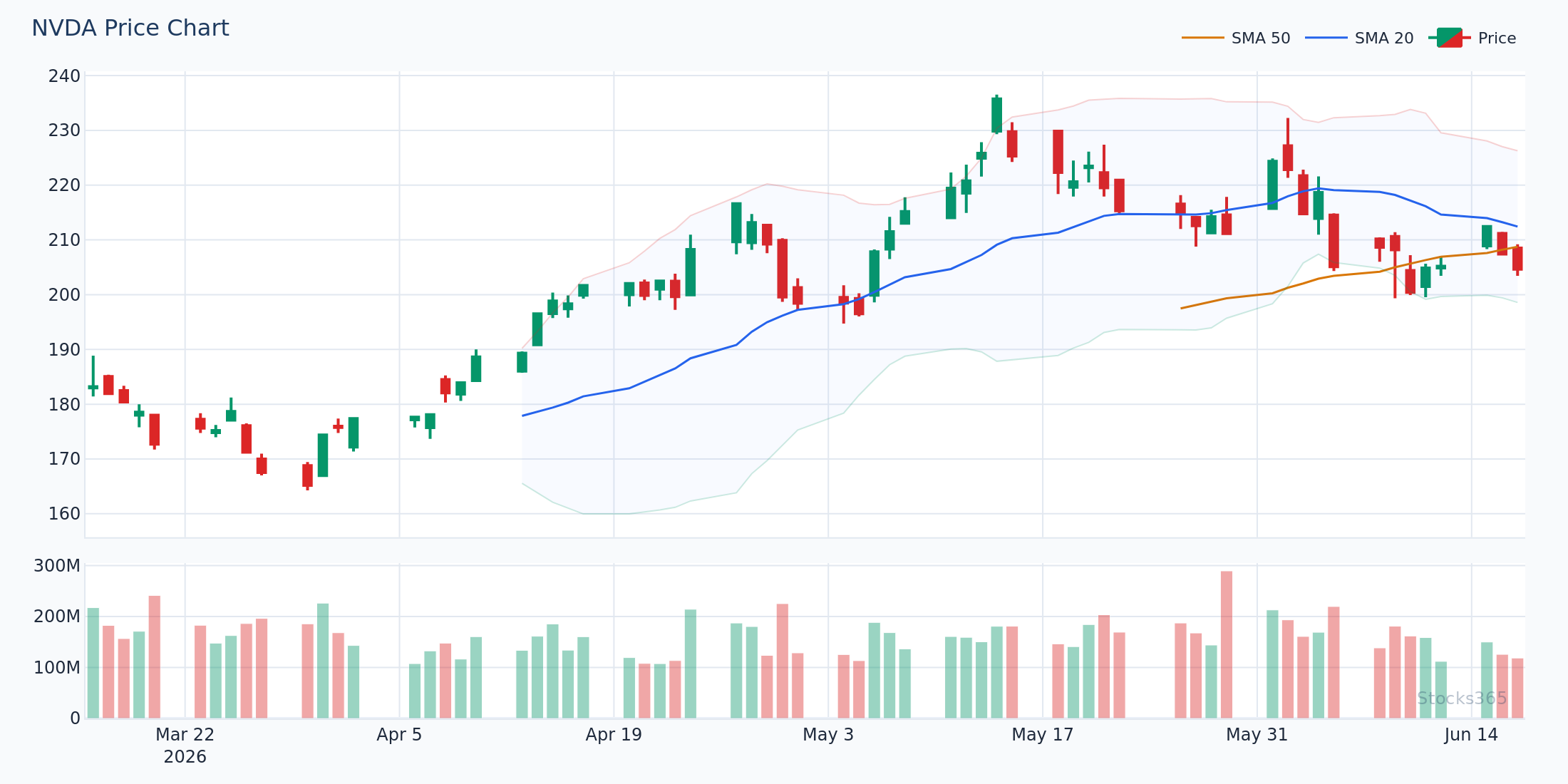
This chart illustrates a classic setup: price compresses inside tightening Bollinger Bands while the MACD histogram begins transitioning from negative to positive. When price subsequently breaks above the upper band with a confirmed MACD cross, the move tends to be swift and sustained. A failure of the MACD to confirm — or a histogram that stalls near the zero line — typically invalidates the breakout signal before it develops.
The Core Bollinger Bands + MACD Strategy Setup
Bullish Entry Signal: The Bounce + Cross Confirmation
This is the bread-and-butter long setup. Here's exactly what to look for:
- Step 1: Price pulls back to or below the lower Bollinger Band
- Step 2: Price begins to reclaim the 20-SMA (the middle band)
- Step 3: MACD line crosses above the signal line — this is your trigger
- Step 4: MACD histogram turns positive (bars move from red to green)
- Step 5: Volume expands above its 20-day average on the confirmation candle
The logic is clean. Price has reached a statistically extended low (lower band = 2 standard deviations below the mean). Momentum is now shifting upward (MACD cross). The trade enters when both conditions align — not when either fires alone.
Bearish Entry Signal: The Rejection + MACD Rollover
The short setup mirrors the long, but with one critical nuance. Rather than a band touch alone, look for a price that tags the upper Bollinger Band, fails to close above it on two consecutive candles, and then shows a MACD histogram reversal — where the histogram bars begin shrinking after reaching a peak.
- Price closes below the upper band after a failed breakout attempt
- MACD histogram peaks and begins declining (histogram reversal pattern)
- MACD line approaches or crosses below the signal line
- Price breaks below the 20-SMA with conviction
Our backtested data on MACD Histogram Reversal Down signals shows a 50.9% win rate across 10,807 signals — with the best performance in crypto assets (62.3% win rate) and weakest in commodities (44.1%). When this pattern appears at a Bollinger Band upper rejection, the confluence significantly narrows the field of false positives. You can explore the full dataset on our research dashboard.
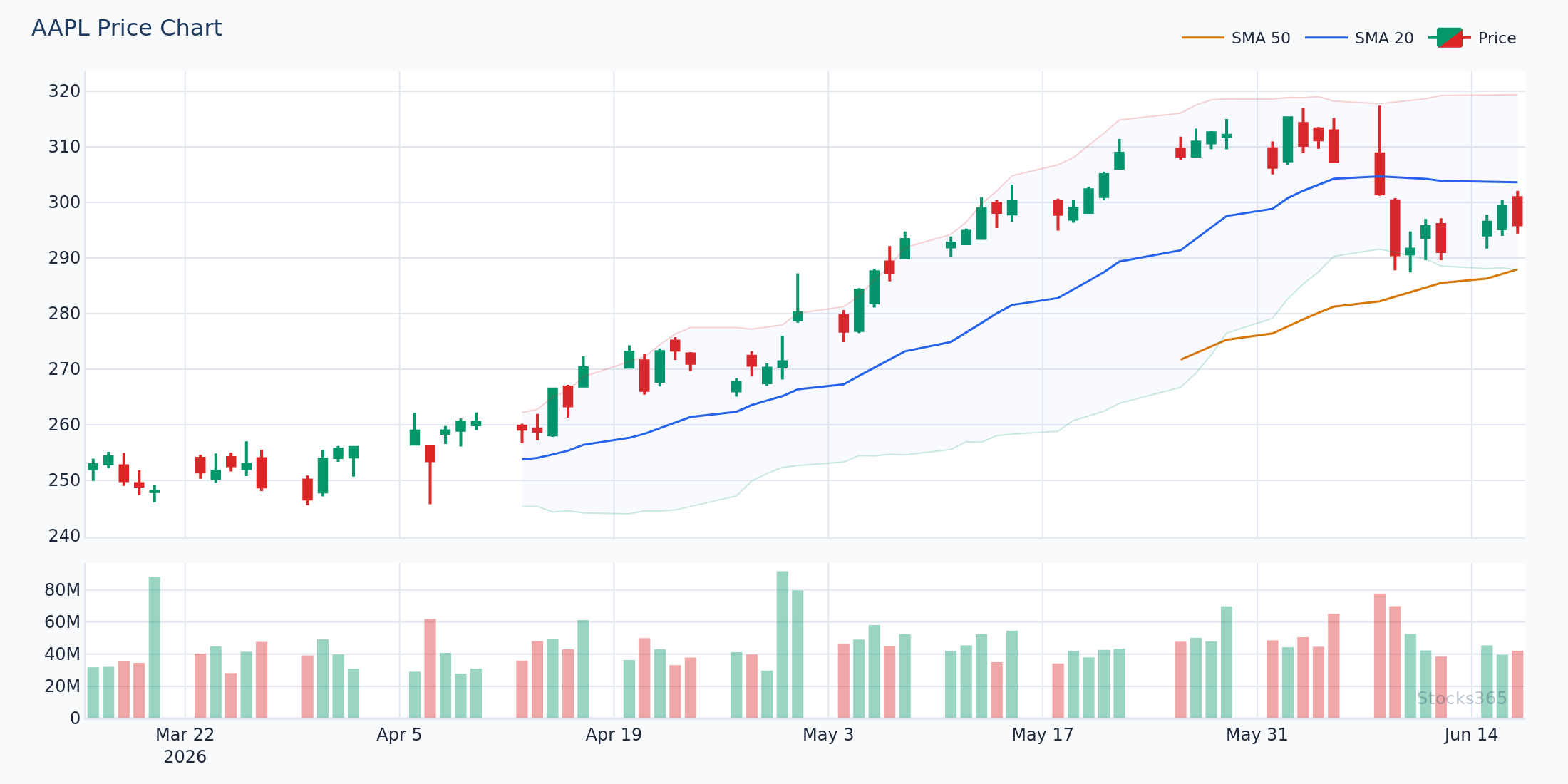
Here, price tags the upper Bollinger Band but fails to hold above the 20-SMA on the following session. The MACD histogram simultaneously shows declining bars — momentum bleeding out in real time. When price breaks below the middle band shortly after, the bearish thesis is confirmed. If instead the MACD histogram had continued expanding and price reclaimed the upper band, the rejection pattern would have been invalidated immediately.
Here's What Most Traders Get Wrong
Most traders treat a MACD bullish cross as a buy signal — full stop. They see the lines cross, they enter. No context. No filter. No structure. The result is a parade of stopped-out trades in choppy, sideways markets where MACD crosses fire repeatedly but lead nowhere.
The edge isn't in the MACD cross itself. It's in where that cross happens relative to the Bollinger Bands. A MACD bullish cross occurring while price is pinned against the lower band — inside a volatility squeeze — carries an entirely different weight than a cross happening mid-band after a 15% rally. One is catching momentum at the start. The other is chasing it near the end. Learn to tell the difference, and the strategy transforms.
The Bollinger Band Squeeze + MACD Pre-Breakout Setup
This is the advanced variation. And it's potent.
When Bollinger Band width compresses to its lowest levels in months — signaling extreme low volatility — a breakout is loading. The market is coiling. The direction of that breakout isn't guaranteed by the squeeze alone, but MACD gives you the first clue about which way the spring unloads.
Watch for the MACD histogram to begin turning positive during the squeeze — before price breaks out of the bands. This is the setup. MACD is telegraphing bullish momentum building beneath the surface, while Bollinger Bands confirm the volatility compression that makes the subsequent expansion explosive.
Entry logic: when price closes above the upper Bollinger Band with the MACD histogram already positive and rising, that's your signal. The squeeze provided the compression. MACD provided the directional bias. The band break provides the execution trigger.
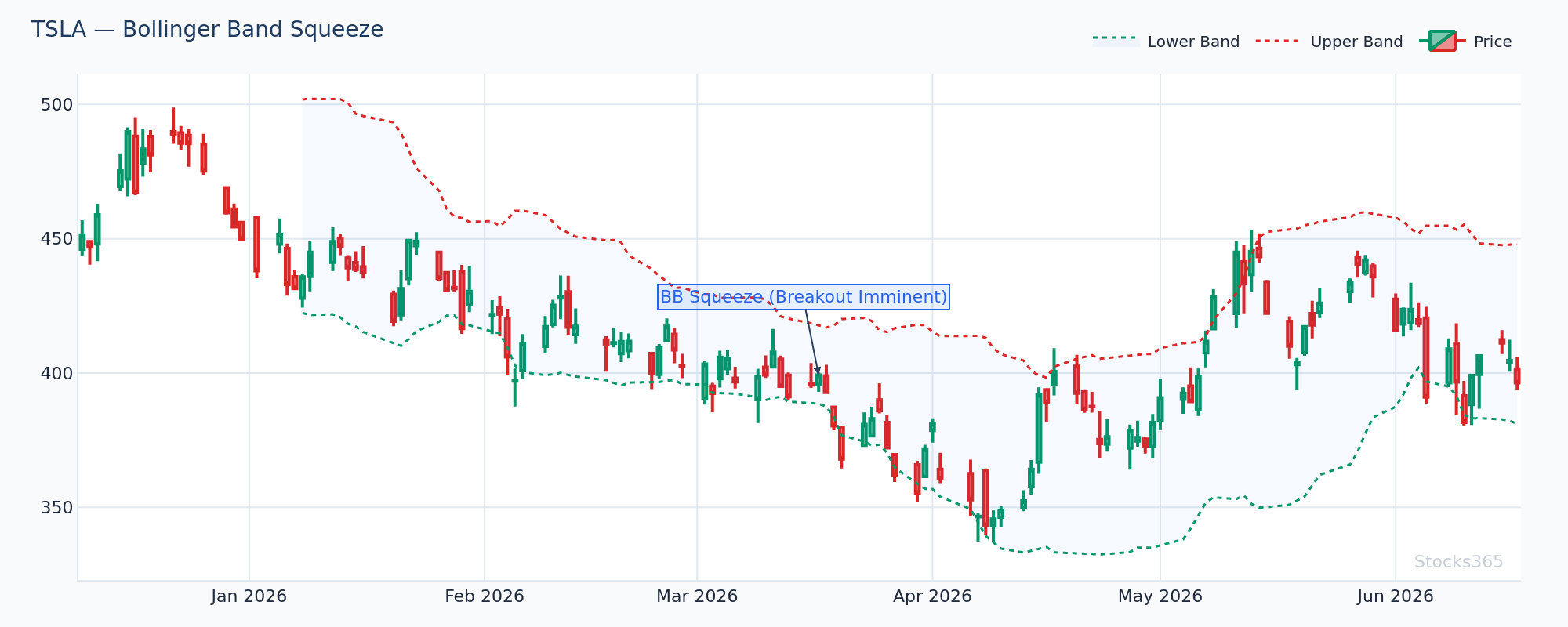
This chart shows band width at a multi-month low while the MACD histogram quietly transitions from flat to slightly positive. Price at this stage is still trading inside the bands — no breakout yet. The breakout candle that eventually pierces the upper band comes with volume surging well above average, confirming participation. A squeeze where MACD fails to turn positive, or where the histogram diverges downward, suggests the breakout — if it occurs — is more likely to fail or reverse quickly.
When This Strategy Works — and When It Doesn't
Where Bollinger Bands + MACD Excels
This combination performs best in trending markets with periodic pullbacks. Think large-cap equities in a sustained bull phase, or commodities in a clear directional trend. The pattern repeats reliably: price trends, pulls back to the lower band, MACD confirms the turn, price continues the primary trend.
Swing traders operating on the daily timeframe get the cleanest setups. The signals are fewer, but conviction is higher. On weekly charts, the combination acts almost as a trend-change detector — ideal for position traders and investors looking to time entries into longer-term positions.
Where It Struggles
In low-trend, high-noise environments — particularly crypto during prolonged consolidation phases or small-cap stocks with erratic price action — this combination degrades. MACD generates whipsaw crosses. Bollinger Band tags become meaningless as price oscillates between bands without follow-through.
The solution isn't to abandon the strategy. It's to add a trend filter. The Golden Cross and Death Cross framework works excellently here: only take Bollinger Bands + MACD long setups when the 50-SMA is above the 200-SMA. Only take short setups when the 50-SMA is below the 200-SMA. You'll trade less. You'll win more.
Also worth noting: if you're already using RSI as a confirmation tool, consider pairing it with this strategy via Hidden RSI Divergence — an advanced signal that works particularly well when Bollinger Bands and MACD are already aligned.
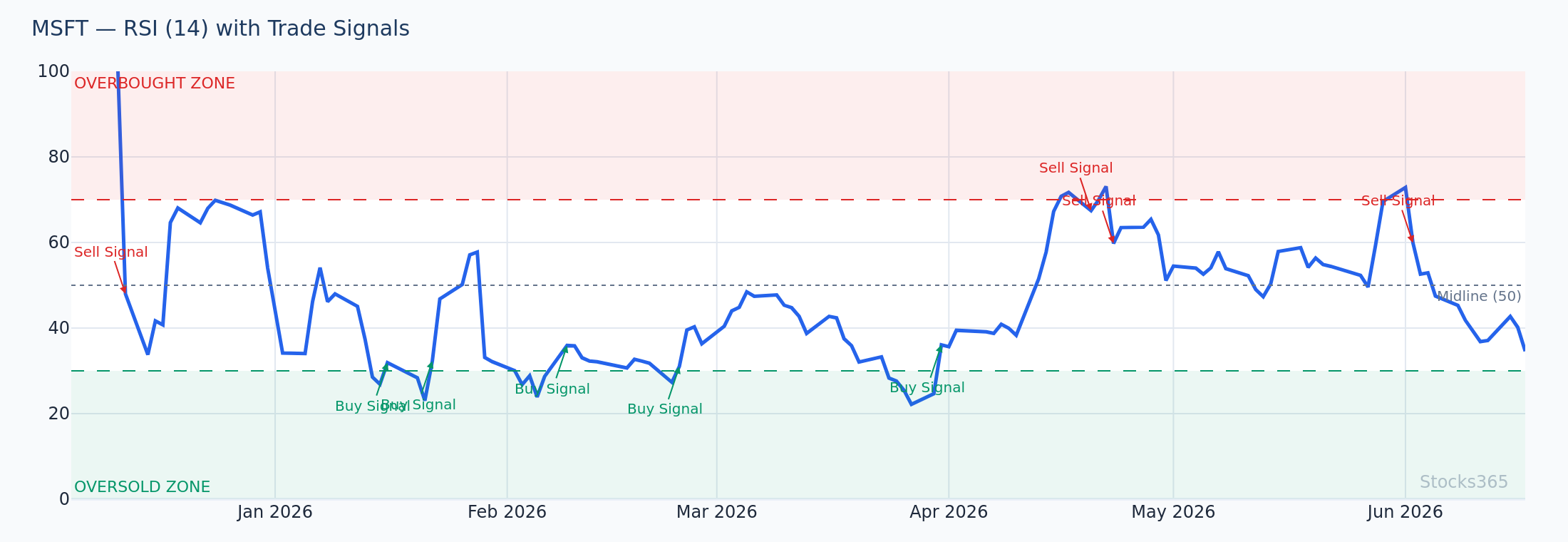
This setup shows all three confluence factors aligning simultaneously: price bouncing off the lower Bollinger Band, MACD crossing above its signal line, and RSI turning upward from oversold territory. Triple confluence like this is rare — but when it appears, the subsequent move tends to be both larger and faster than single-indicator setups. If RSI remains below 40 even after the MACD cross, the bounce often stalls at the 20-SMA rather than extending to the upper band.
Practical Rules for Executing This Strategy
Entry Rules
- Wait for price to close — not just touch — the confirmation candle above/below the trigger level
- MACD cross must occur within 3 candles of the Bollinger Band signal — otherwise the setup has aged out
- Volume must expand at least 1.5x the 20-period average volume on the entry candle
- Do not enter against the primary trend — use a 50/200 SMA relationship as your regime filter
Exit Rules
- For long trades: trail stops to just below the 20-SMA; exit when MACD histogram peaks and begins declining
- For short trades: cover when price touches or closes below the lower Bollinger Band with MACD histogram turning positive
- Time-based exit: if the trade hasn't moved meaningfully within 5-7 candles of the timeframe, reassess — dead trades drain capital and attention
For deeper entry refinement, the RSI Trendline Strategy offers an excellent additional filter — particularly for timing entries on the daily chart after the primary Bollinger Bands + MACD signal fires.
Timeframe Considerations
The daily chart is the sweet spot for this strategy. Enough data per signal to filter noise. Fast enough to capitalize on meaningful moves. Intraday use (15-minute, 1-hour) is possible but demands tighter filters and faster execution — the signal-to-noise ratio degrades significantly below the daily timeframe.
Weekly charts suit patient traders. The setups are less frequent — perhaps 3-5 per year on a given stock — but the moves that follow are proportionally larger. Use the RSI backtesting framework as a reference point for how different timeframes affect win rates across momentum-based strategies.
One more thing worth noting: for traders who also use oscillators, understanding how the Stochastic Oscillator interacts with Bollinger Band extremes can add a third confirmation layer — particularly useful on lower timeframes where MACD alone produces too many false signals.
What to Watch For
- Bollinger Squeeze breakouts on trending large-cap equities: When band width drops to its lowest percentile over a 6-month lookback, and MACD histogram turns positive before the breakout candle forms, the subsequent expansion typically produces outsized moves. Monitor names where the squeeze has persisted for 10+ sessions — the longer the coil, the sharper the release tends to be.
- Lower band bounce + MACD cross in commodities: Based on our backtested data, MACD bullish crosses show their strongest performance in commodity markets (55.2% win rate across 2,310 signals). When a lower Bollinger Band tag occurs during an established uptrend in commodity-linked instruments, the MACD cross confirmation carries above-average historical reliability.
- MACD histogram divergence at the upper band: When price makes a new high that tags or exceeds the upper Bollinger Band but the MACD histogram prints a lower peak than the previous cycle high — that's bearish divergence. This is one of the most reliable early warning signs of an impending reversal. Act on the histogram divergence; don't wait for the MACD line cross.
- Failed upper band breaks with MACD rollover in crypto: The MACD Histogram Reversal Down pattern shows a 62.3% win rate in crypto markets specifically — the strongest asset class for this signal. When crypto assets fail to hold above the upper Bollinger Band and the MACD histogram simultaneously peaks and begins declining, short-term bearish pressure tends to follow with notable consistency.
- Post-squeeze MACD pre-loading: In any asset class, watch for MACD histogram bars transitioning from red to green while the Bollinger Band width is still compressed. This pre-loading pattern — where momentum shifts before volatility expands — gives early-entry traders a structural advantage over those waiting for the band break to confirm.
How Stocks365 Uses This
At Stocks365, the Bollinger Bands + MACD combination is one of 12+ technical factors integrated into our proprietary Trust Score system. Specifically, a MACD bullish or bearish cross contributes to the momentum agreement score — a sub-component that measures how many independent momentum signals are pointing in the same direction at the time of evaluation.
When a stock's Trust Score registers alignment between its Bollinger Band position (price at lower band in uptrend), a MACD cross, and volume expansion, the system flags a higher-confidence opportunity in the signals dashboard. The Trust Score doesn't predict — it aggregates evidence. More agreement across independent signals means higher structural conviction, not a guaranteed outcome.
Individual stock signals — like AAPL signal analysis — show exactly how Bollinger Band and MACD inputs contribute to the overall score in real time, so traders can see not just the signal but the reasoning behind it.
Key Takeaways
- Bollinger Bands provide volatility context and price extremity; MACD provides momentum direction and timing — combined, they cover each other's weaknesses
- The core long setup: price tags lower band → reclaims 20-SMA → MACD crosses bullish with expanding volume
- The core short setup: price fails to hold upper band → MACD histogram peaks and reverses → price breaks below 20-SMA
- Standalone MACD crosses have a 49.7% win rate — Bollinger Band context filters this significantly toward higher-probability setups
- The Bollinger Squeeze + MACD pre-load is the highest-conviction variation: MACD turns positive during the squeeze, before the breakout fires
- Always apply a trend filter (50/200 SMA relationship) — this single addition eliminates the majority of whipsaw losses in choppy markets
- MACD Histogram Reversal Down signals perform best in crypto (62.3%) and weakest in commodities (44.1%) — asset class matters
- Daily timeframe offers the best signal quality; intraday use requires additional filters