
What Is a Moving Average? The Core Concept
A moving average is one of the most widely used tools in technical analysis. It smooths out price data over a set period — giving you a cleaner picture of where price has been, and where it might be heading.
Here's the simple version: instead of staring at a jagged, noisy price chart, a moving average draws a smooth line through the data. That line tells you the average price over a defined window of time — say, the last 20 days, or the last 200 days.
Simple. Powerful. Often misunderstood.
The "moving" part just means the window rolls forward with each new candle. Yesterday's oldest data point drops off, today's new price gets added. The average updates continuously.
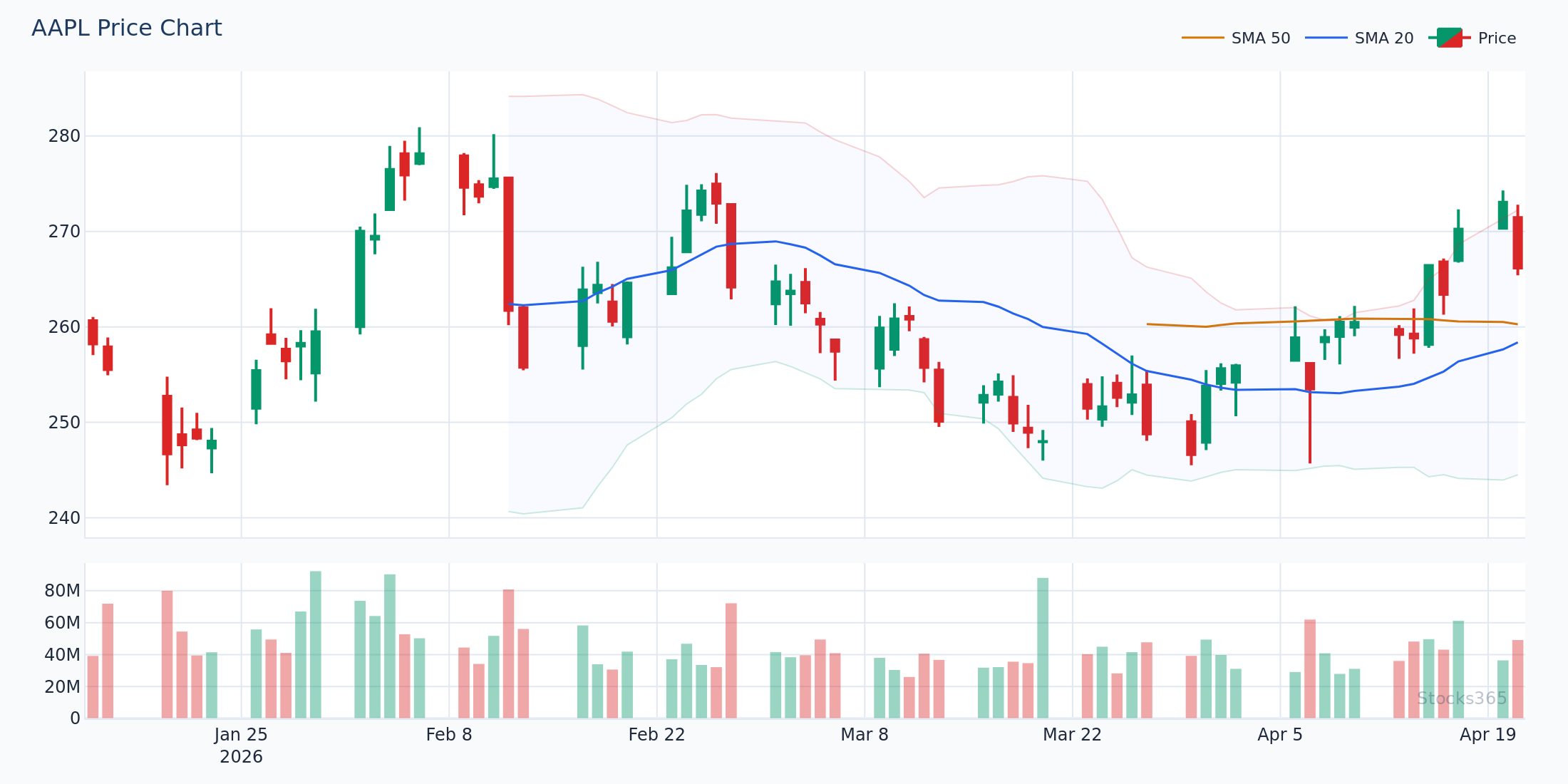
This chart shows price interacting with two key moving averages simultaneously. Notice how price tends to find support near the rising 20-SMA during uptrends, and how the relationship between the two averages reveals the broader trend direction. A sustained close below the 200-SMA would invalidate the bullish structure entirely.
The Two Main Types of Moving Average
Not all moving averages are built the same. Two dominate in practice: the Simple Moving Average and the Exponential Moving Average. Knowing the difference matters.
Simple Moving Average (SMA)
The SMA gives equal weight to every price in the window. A 20-day SMA adds the last 20 closing prices together and divides by 20. That's it. No tricks.
The benefit: it's smooth, consistent, and easy to interpret. The drawback: it reacts slowly. A price spike from two weeks ago has exactly the same influence as today's close. That lag can cost you in fast-moving markets.
Exponential Moving Average (EMA)
The EMA fixes the lag problem — partly. It applies a multiplier that gives more weight to recent prices. The most recent close counts more than a close from ten days ago.
The result: the EMA hugs price more closely. It reacts faster to new information. Day traders and swing traders tend to favor EMAs for this reason. Position traders and trend followers often stick with SMAs.
Neither is universally better. Context is everything.
Other Types Worth Knowing
- Weighted Moving Average (WMA): Similar to EMA but uses a linear weighting scheme. Less common in practice.
- Hull Moving Average (HMA): Designed to minimize lag while maintaining smoothness. Popular among algorithmic traders.
- VWMA (Volume-Weighted Moving Average): Weights price by volume. Useful for intraday context on liquid assets.
Start with SMA and EMA. Master those first before exploring the rest.
The Most Commonly Used Moving Average Periods
Certain periods have become market conventions. Not because they're mathematically perfect — but because enough traders watch them, they become self-fulfilling.
- 9 EMA: Favored by scalpers and day traders. Extremely sensitive to price.
- 20 SMA: The swing trader's default. Tracks the short-term trend cleanly.
- 50 SMA: Medium-term trend reference. Institutional traders watch this closely.
- 100 SMA: A middle ground between 50 and 200. Less watched, but relevant in some setups.
- 200 SMA: The long-term trend benchmark. The line between bull and bear market territory for most analysts.
The 20 and 200 are the two you can't ignore as a beginner.
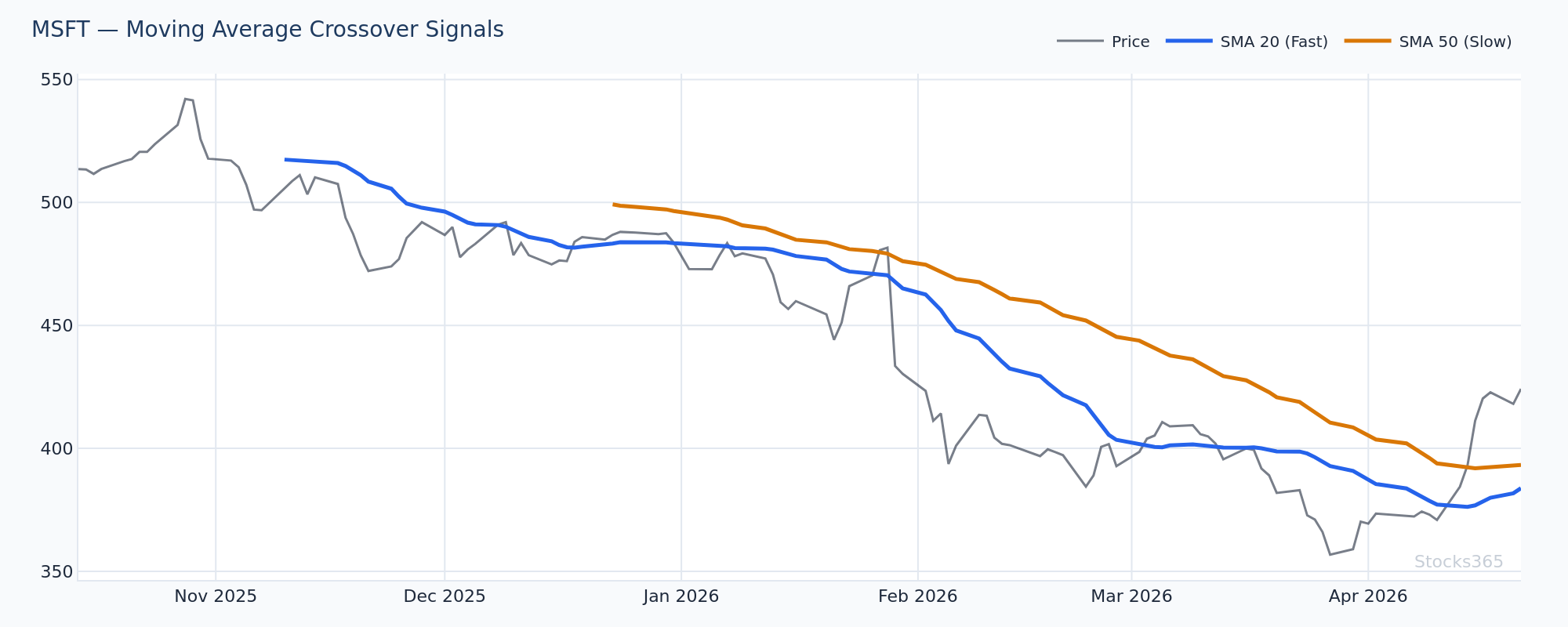
This setup illustrates two of the most discussed crossover events in trading. When the 50-SMA crosses above the 200-SMA (the "golden cross"), it signals a potential shift from a bearish to bullish trend regime. The opposite — the "death cross" — signals the reverse. The key confirmation to watch: volume expansion at the moment of the cross, and whether price is already trading above both averages when the crossover occurs.
How Moving Averages Are Used in Trading
Moving averages serve four distinct purposes. Most beginners only use one or two. Knowing all four expands your edge.
1. Trend Identification
The most fundamental use. When price trades above a rising moving average, the trend is up. When price trades below a declining moving average, the trend is down. That's the baseline read.
A useful filter: if price is above the 200-SMA, you're operating in a long-term uptrend. Prioritize long setups. Below the 200-SMA, the bias flips short — or you stay out altogether.
2. Dynamic Support and Resistance
Moving averages act as floating support and resistance levels. In a healthy uptrend, price pulls back to the 20-SMA and bounces. Traders watch for this pattern specifically — a clean test of the moving average followed by a bullish candle and volume confirmation.
The 50-SMA and 200-SMA serve as deeper support levels during larger corrections. A stock that pulls back to its 200-SMA after a strong run, then holds, is one of the cleaner long setups in technical trading.
3. Crossover Signals
When a shorter-period moving average crosses above a longer one, it generates a bullish signal. When it crosses below, bearish. The golden cross (50 crossing above 200) and death cross (50 crossing below 200) are the most referenced examples.
Crossovers are lagging by nature. They confirm a trend shift after it's already in motion. That's not a flaw — it's a feature. You're trading confirmation, not prediction.
4. Combining with Other Indicators
Moving averages work best when paired with momentum indicators. If you're not already familiar with RSI, our complete beginner's guide to RSI is the natural next read. Combining a moving average trend filter with RSI momentum gives you two independent data sources pointing in the same direction — that's where the edge compounds.
For a deeper look at how RSI complements moving averages in practice, see our step-by-step guide on using RSI in trading.
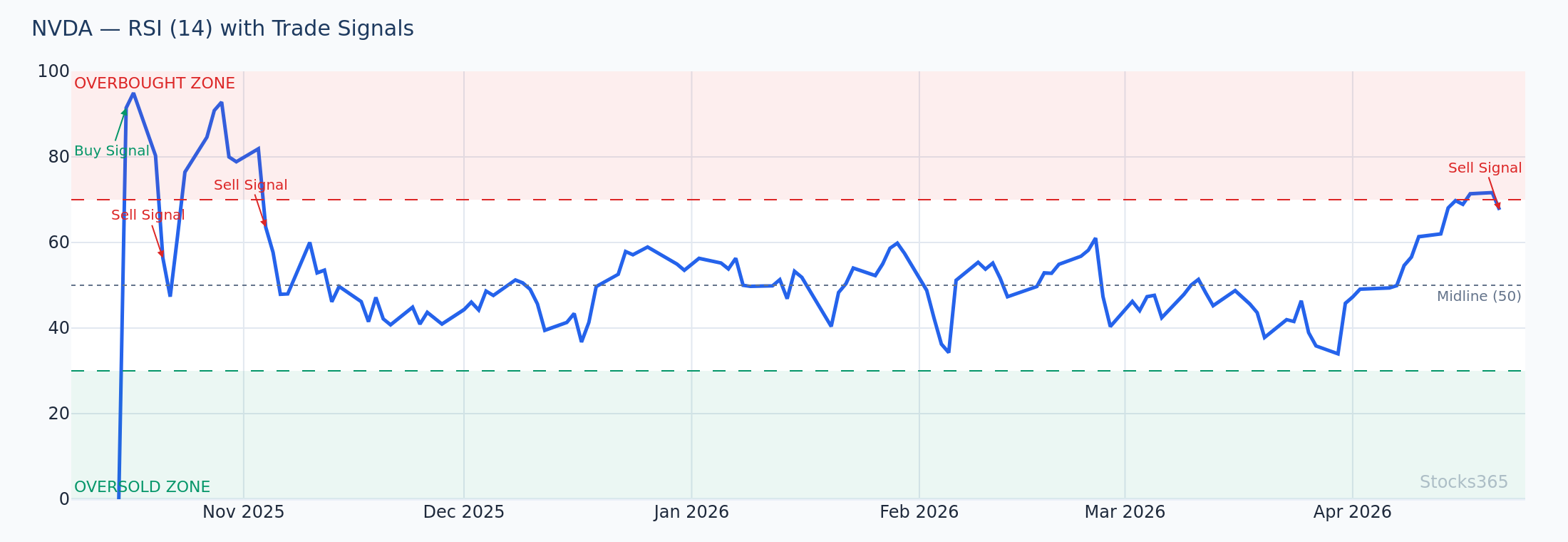
When price reclaims the 20-EMA from below and RSI simultaneously crosses back above 50, you have dual confirmation of a trend resumption. Watch for this combination specifically after a pullback in a prevailing uptrend. The setup becomes higher probability when volume on the recovery candle exceeds the 20-session average.
Here's What Most Traders Get Wrong
Most beginners treat a price cross below the 20-SMA as an automatic sell signal. In a strong uptrend, price crosses below the 20-SMA repeatedly — and bounces every single time. The edge isn't in the cross itself. The edge is watching whether price closes back above the moving average within 1-3 sessions, or whether it continues lower with expanding volume. A brief dip below followed by a strong reclaim is often the healthiest pattern in a bull trend. A cross below accompanied by rising volume and failed recovery attempts is when the warning is real.
Moving Average Crossover Strategies: The Setups That Actually Work
The Pullback-to-MA Setup
This is the cleanest setup for swing traders. Price is in a clear uptrend above the 20-EMA. Price pulls back to touch the 20-EMA. A bullish reversal candle forms at the average with volume picking up. Entry on the break of the reversal candle's high. Stop below the moving average.
Clean. Defined risk. Goes with the trend.
The MA Reclaim Setup
Price drops below a key moving average (say, the 50-SMA), consolidates, then breaks back above it with conviction. This "reclaim" often marks the beginning of the next leg higher. Volume confirmation is critical — a reclaim on low volume is suspect. A reclaim on volume 1.5x to 2x the average is actionable.
The Dual-MA Trend Filter
Use the 200-SMA to define the macro trend (above = bullish bias, below = bearish bias). Use the 20-EMA for timing entries within that macro trend. Only take long setups when price is above the 200-SMA. This single filter eliminates a large percentage of counter-trend trades that bleed accounts dry.
For traders looking to refine entries further, pairing this with RSI overbought and oversold readings adds another layer. See our guide on RSI overbought and oversold levels for how to layer these signals effectively.
What the Data Actually Says About SMA Crosses
Moving average crossovers get talked about constantly. But what do the numbers say?
Our analysis of 3,332 signals across stocks, crypto, and forex found that price crosses below the 20-SMA produce a 50.9% win rate over a 10-day holding period — with a profit factor of 1.06. The best-performing asset class for this signal was crypto at 66.8%. The worst was forex at 42.5%. That gap alone tells you something important: the same moving average signal behaves very differently depending on the asset class you're trading it in. See the full dataset at Stocks365 Insights.
The takeaway isn't that moving averages are weak tools. It's that raw crossover signals without additional filters are close to coin flips in many markets. The edge comes from context: trend direction, volume, momentum confirmation, and asset class selection.
Moving Averages in Different Market Conditions
Trending Markets
Moving averages shine in trending markets. Price respects the averages as dynamic support. Crossover signals have follow-through. Pullback-to-MA setups work repeatedly. This is the environment moving averages were designed for.
Ranging Markets
Moving averages struggle in sideways, choppy markets. Price whipsaws above and below the average. Crossover signals fire repeatedly with no follow-through. In ranging conditions, oscillators like RSI and the Stochastic Oscillator outperform moving averages as standalone tools. For a detailed comparison, see our guide on RSI vs the Stochastic Oscillator.
Know the regime. Adapt the tools.
Volatile Markets
In high-volatility regimes, price moves through moving averages aggressively in both directions. Shorter-period moving averages produce excessive noise. Longer-period averages (50, 100, 200) become more relevant as structural references. Reduce position size in these conditions regardless of what the moving average says.
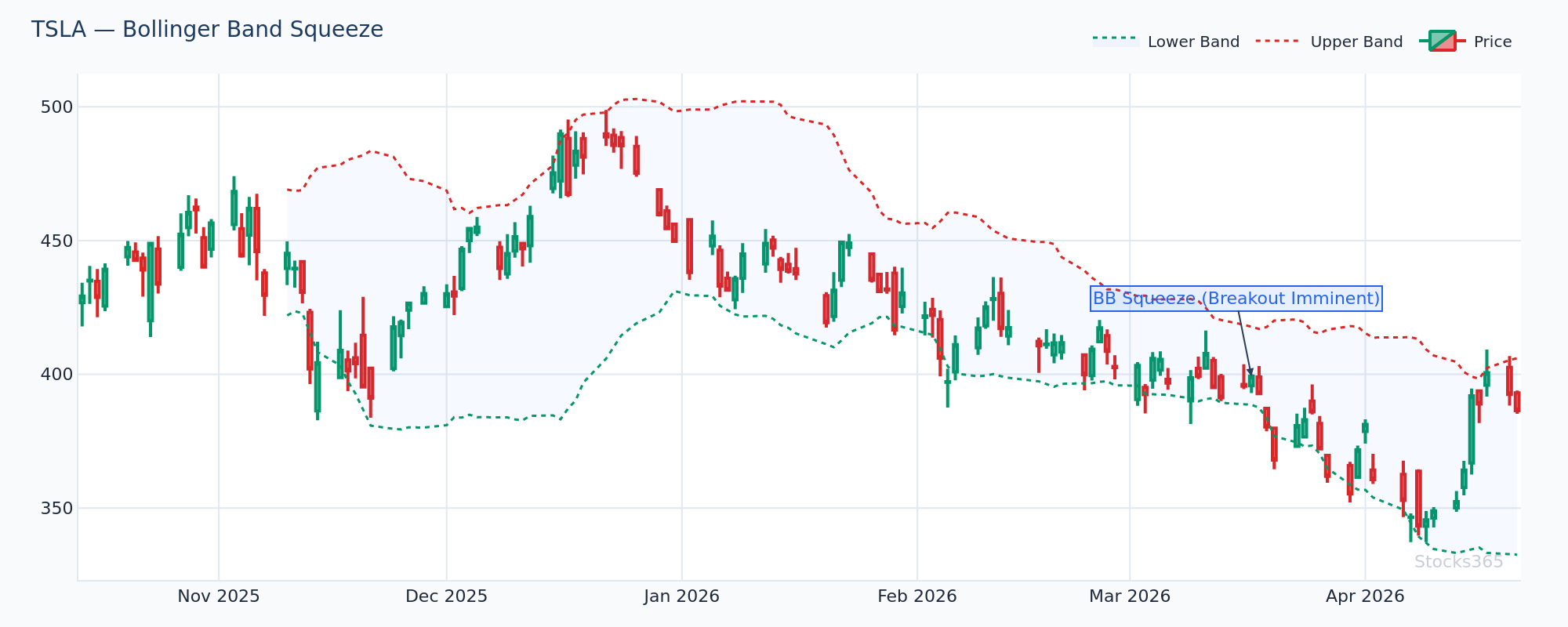
The Bollinger Band squeeze — where bands contract tightly around the 20-SMA — signals a period of low volatility before a high-volatility expansion. The 20-SMA serves as the midpoint anchor during the squeeze. Watch for the candle that breaks outside the bands on expanding volume — that's typically the direction of the next sustained move. A break back inside the bands after the initial expansion often signals a false breakout.
Moving Averages vs. Other Indicators: Where They Fit
Moving averages are trend-following tools. They confirm direction but don't predict reversals. RSI and momentum oscillators identify overextended conditions. Volume indicators confirm conviction. Each tool answers a different question.
A complete trading framework uses moving averages to answer: What is the trend? Then uses momentum indicators to answer: Is the trend overextended? Then uses volume to answer: Is there conviction behind the move?
If you're building that kind of layered approach, understanding RSI divergence signals is a natural complement to moving average crossover setups. Divergence between price and momentum — spotted against a moving average trend — is one of the higher-probability reversal signals in technical analysis.
And for traders who want to go deeper on momentum signals that work even when moving averages give unclear reads, hidden RSI divergence is worth studying.
Choosing the Right Moving Average for Your Strategy
There's no single best moving average. The right choice depends on your timeframe, your asset class, and your strategy type.
- Day traders: 9 EMA and 20 EMA on 5-minute or 15-minute charts. Fast reaction, tight stops.
- Swing traders: 20 EMA and 50 SMA on daily charts. Balances sensitivity with noise reduction.
- Position traders: 50 SMA and 200 SMA on daily or weekly charts. Structural trend identification only.
One practical principle: the longer the moving average period, the more significant the signal when price interacts with it. A 200-SMA test means more than a 20-SMA test in terms of structural significance.
For those interested in how period selection affects indicator performance more broadly, the same logic applies to RSI settings — our guide on RSI settings and period selection covers this in depth.
📌 Key Takeaways
- A moving average smooths price data to reveal trend direction by averaging closing prices over a defined period.
- The two most important types are the Simple Moving Average (SMA) and Exponential Moving Average (EMA) — EMA reacts faster, SMA is smoother.
- The most watched periods are 20, 50, and 200. Each serves a different timeframe and purpose.
- Moving averages identify trend direction, act as dynamic support/resistance, generate crossover signals, and filter entries when combined with momentum indicators.
- They work best in trending markets and struggle in choppy, sideways conditions — regime awareness is essential.
- Raw crossover signals produce near coin-flip results without additional context. Volume, momentum, and asset class selection dramatically improve outcomes.
- Pair moving averages with RSI for trend-plus-momentum confirmation — two independent signals pointing the same direction is a higher-probability setup.
What to Watch For
- Pullback-to-20-EMA bounces in trending stocks: When a stock in a clear uptrend pulls back to test its 20-EMA and prints a bullish engulfing or hammer candle on above-average volume, this is one of the cleanest continuation setups. The pattern invalidates if price closes below the 20-EMA with volume expanding.
- 200-SMA reclaims in large-cap equities after extended corrections: When price reclaims the 200-SMA after trading below it for multiple weeks, and does so with volume expansion, it often marks the beginning of a sustained recovery phase rather than a brief relief bounce.
- Golden cross formations where price is already extended above both averages: When the 50-SMA crosses the 200-SMA but price has already run 15-20% above both, the signal is late. Watch for these to produce consolidation rather than immediate trend acceleration — the better entry is on the first pullback to the 50-SMA after the cross confirms.
- Moving average convergence in low-volatility regimes: When the 20, 50, and 200 SMAs compress toward each other on a daily chart, a major directional move is typically building. The first clean break and close above or below all three moving averages on volume expansion often defines the next trend for weeks.
- EMA ribbon compression in crypto: On crypto assets, when a multi-EMA ribbon (9, 20, 50 EMAs) compresses tightly after a sustained trend, the subsequent expansion tends to be sharp and directional. This setup pairs well with RSI recovering from oversold territory to confirm the direction of the expansion.
⚡ How Stocks365 Uses Moving Averages
Moving averages are embedded directly into the Stocks365 trust score system as one of 12+ technical indicators that contribute to each signal's composite rating. Specifically, moving average positioning — whether price is above or below key SMAs and EMAs — feeds into the trend regime scoring layer of the trust score. A signal generated in an asset where price is above both the 20-SMA and 200-SMA receives a higher regime alignment score than one generated in a structurally downtrending instrument.
The trust score also incorporates moving average crossover recency — recent golden crosses increase the agreement score between trend-following indicators, while death crosses add weight to bearish signal clusters. This means when you view any signal on the Stocks365 signals dashboard, the moving average context is already baked into the quality rating — you're not evaluating it manually. For a specific example of how this looks in practice, check the trust score breakdown on any individual signal like the AAPL signal page.
Our analysis of 3,289 price-crosses-above-SMA-20 signals found a 48.3% win rate and a profit factor of 0.88 over a 10-day holding period — a below-neutral result across the full dataset. But stocks as an asset class showed a 52.3% win rate for this specific signal, which is why the trust score weights asset class context rather than treating all crossover signals equally. Full signal research available at Stocks365 Insights.
Frequently Asked Questions
What is a moving average in simple terms?
A moving average is the average closing price of an asset over a specific number of periods — updated with each new candle. It smooths out price noise and draws a single line on a chart showing where price has been trending. A 20-day moving average, for example, shows the average close price over the past 20 trading days, recalculated each day as new data arrives.
What's the difference between SMA and EMA?
The Simple Moving Average (SMA) gives equal weight to all prices in the window. The Exponential Moving Average (EMA) gives more weight to recent prices, making it react faster to new price action. EMAs are preferred by shorter-term traders who need responsiveness. SMAs are preferred by traders who want cleaner, less reactive trend identification. Both have valid use cases — the choice depends on your timeframe and strategy.
Which moving average is best for beginners?
Start with the 20-SMA and 200-SMA on daily charts. The 20-SMA tracks the short-term trend and acts as dynamic support in uptrends. The 200-SMA defines the macro trend structure — above it is broadly bullish, below it is broadly bearish. These two averages alone give a beginner a clear framework for trend identification without overcomplicating the analysis.
Do moving averages work in all markets?
Moving averages work best in trending markets — stocks in strong uptrends, crypto during major directional runs, commodities in sustained supply/demand cycles. They produce noisy, unreliable signals in choppy, sideways markets where price oscillates without directional conviction. Identifying whether a market is trending or ranging before applying moving average strategies is a fundamental skill. In ranging conditions, oscillators like RSI tend to outperform moving averages as timing tools.
How do I use moving averages with RSI together?
The most practical combination: use the moving average to identify trend direction, use RSI to time entries within that trend. In an uptrend (price above the 20-EMA and 200-SMA), wait for RSI to pull back toward the 40-50 zone — indicating a momentum reset without a trend break. When RSI recovers back above 50 while price holds above the moving average, that's a dual-confirmation long setup. For a full breakdown of this approach, see our RSI trading guide and our RSI settings guide.