
Why RSI Crypto Trading Requires a Different Approach
The Relative Strength Index (RSI) is one of the most widely used momentum indicators in financial markets — but applying it straight out of the box to Bitcoin and other cryptocurrencies is a recipe for frustration. Crypto markets move on a fundamentally different rhythm than equities. They trade 24 hours a day, seven days a week, they react violently to regulatory news, macroeconomic shifts, and even social media sentiment, and their volatility can dwarf anything seen in traditional stock markets.
If you've ever bought Bitcoin because the RSI dipped below 30 and then watched it continue falling to 15, you already understand the problem. Standard RSI rules designed for equities simply don't translate one-to-one to crypto. The good news? With the right adjustments, RSI becomes one of the most powerful tools you can use in RSI crypto trading. This guide will show you exactly how to make those adjustments.
Before diving in, if you're new to the indicator itself, take a few minutes to read What Is RSI? The Complete Beginner's Guide to make sure you have a solid foundation. And if you want to understand the math behind it, the RSI Calculation Formula Explained Step by Step is essential reading.
How Bitcoin's Volatility Changes Everything About RSI Signals
In traditional equity markets, an RSI reading above 70 reliably flags an overbought condition and a reading below 30 signals oversold territory. Bitcoin laughs at these thresholds. During strong bull markets, BTC can sustain RSI readings above 70 for weeks or even months before any meaningful pullback. During bear market capitulations, it can crash through 30 and keep falling until RSI touches levels in the low teens.
This happens for several concrete reasons:
- No circuit breakers: Crypto exchanges don't halt trading during extreme moves. A 20% single-day crash is unusual in stocks but has happened repeatedly in Bitcoin's history.
- 24/7 markets: Without overnight or weekend gaps, momentum can build or unwind continuously without a reset.
- Thinner liquidity relative to equity markets: Even with Bitcoin's multi-trillion dollar market cap in 2026, large player movements can create exaggerated RSI swings.
- Sentiment-driven cycles: Fear and greed cycles in crypto are more pronounced, causing RSI extremes to persist longer than in stocks.
The implication is clear: in RSI crypto trading, you need recalibrated thresholds and a more nuanced interpretation framework. Let's build that framework now.
Adjusting RSI Settings for Crypto Markets
The Period Setting: Why 14 Isn't Always Optimal for Bitcoin
The default RSI period of 14 was popularized by J. Welles Wilder for daily stock charts. For Bitcoin, which trades continuously and experiences compressed price cycles, you may need to rethink this number entirely depending on your timeframe.
Here's a practical breakdown of how different RSI periods behave in crypto:
- RSI(7) or RSI(9): Much more sensitive. Great for scalping on 15-minute or 1-hour charts. Generates more signals but also more false positives. Best used with confirmation from price action or volume.
- RSI(14): The standard setting. Works reasonably well on daily Bitcoin charts during ranging markets. Can lag significantly during trending markets.
- RSI(21) or RSI(25): Smoother and slower. Excellent for swing traders looking at daily or weekly charts. Filters out noise but may cause you to miss short-term entries.
For most swing traders focusing on Bitcoin, a setting of RSI(10) on the daily chart strikes a useful balance — sensitive enough to catch meaningful momentum shifts but not so noisy that it fires on every candle. For in-depth guidance on tuning your periods, see our comprehensive piece on RSI Settings: Master the Best Period for Your Strategy.
Recalibrating Overbought and Oversold Thresholds for Crypto
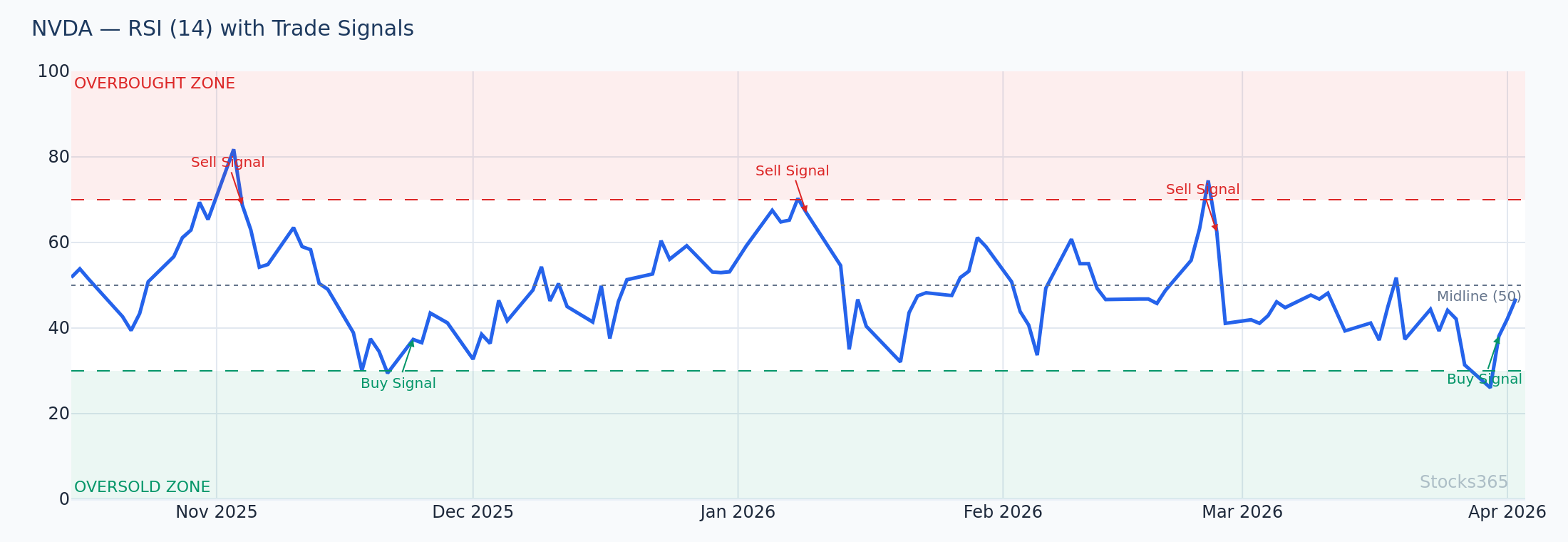
This is the single most important adaptation you can make for RSI crypto trading. Rather than using the classic 70/30 levels, experienced Bitcoin traders often shift to:
- Overbought threshold: 75–80 during bull markets (RSI must be truly extreme to signal a reliable reversal)
- Oversold threshold: 20–25 during bear markets (standard 30 gets hit too frequently to be useful)
- Midline (50) as a trend filter: In a Bitcoin bull market, treat RSI 50 as support. In a bear market, treat it as resistance.
For a deeper dive into how overbought and oversold signals should be interpreted across different market conditions, our article on RSI Overbought and Oversold Levels: Master the Signals breaks it down comprehensively.
A practical example: In early 2026, Bitcoin was trading in a consolidation range between $88,000 and $102,000. On the daily RSI(14), readings of 65–68 marked the top of each bounce, while readings of 38–42 marked the bottom. No single touch of the classic 70 or 30 levels occurred during this six-week range. A trader using standard thresholds would have been either confused or constantly wrong. A trader using recalibrated thresholds would have captured multiple clean swing trades.
RSI Divergence: The Most Reliable Signal in Crypto
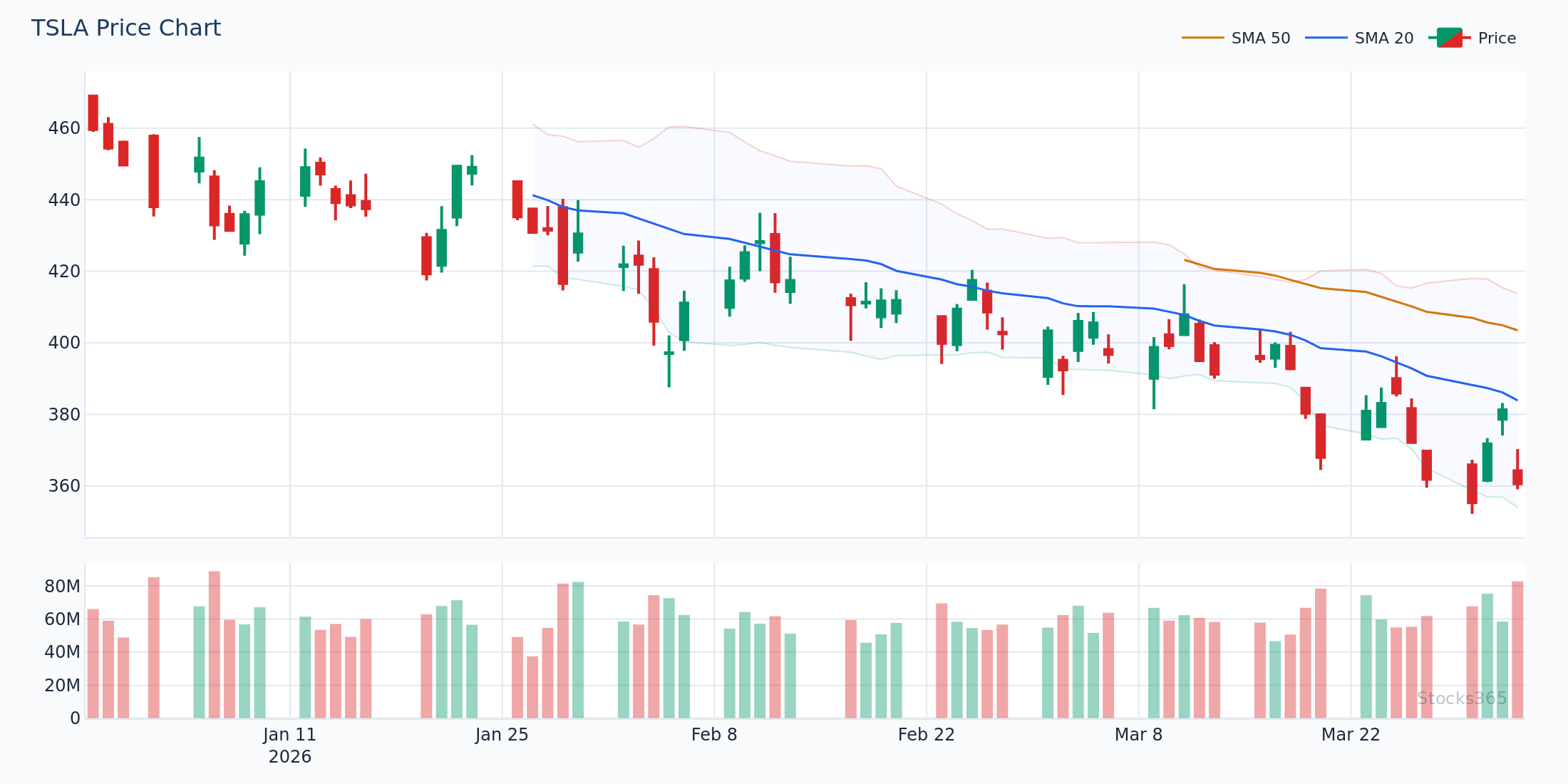
If there's one RSI technique that consistently delivers alpha in crypto markets, it's divergence analysis. When Bitcoin's price makes a new high but RSI makes a lower high, that bearish divergence is a powerful warning sign. When price makes a new low but RSI forms a higher low, that bullish divergence often precedes meaningful recoveries.
Why does divergence work so well in crypto? Because it captures the exhaustion of momentum before price catches up. Bitcoin's explosive moves often run out of steam while price is still technically climbing — divergence catches this precisely.
Practical Divergence Example in Bitcoin
Consider a scenario where Bitcoin rallies from $78,000 to $95,000 over three weeks. On the first push to $95,000, RSI peaks at 72. Bitcoin then pulls back to $84,000, and RSI drops to 48. On a second push, Bitcoin reaches $97,500 — a new price high — but RSI peaks at only 66. That's textbook bearish RSI divergence. A trader watching this would know to tighten stops or look for short entries rather than adding to longs at what looks like a breakout.
The opposite scenario plays out in bear markets. Bitcoin falls from $70,000 to $52,000 with RSI hitting 22 on the lows. A partial recovery brings it to $61,000 with RSI at 51. Then a second selloff takes Bitcoin to a new low of $49,500 — but RSI only drops to 31. That higher RSI low on a lower price low is a bullish divergence signal and often marks the beginning of a significant recovery.
To master both classic and hidden forms of this technique, read our detailed guides on RSI Divergence Explained: Master Bullish & Bearish Signals and Hidden RSI Divergence: The Advanced Signal Most Traders Miss.
Timeframe Selection: Which Chart to Use for Bitcoin RSI
One of the biggest mistakes crypto traders make with RSI is using it on the wrong timeframe for their strategy. Here's a practical framework:
Short-Term Traders (Scalpers and Day Traders)
Use RSI on the 5-minute to 1-hour charts. Look for RSI to reach extreme levels (above 75 or below 25 with adjusted settings), and combine with support/resistance levels from the 4-hour chart. Be aware that on very short timeframes, RSI signals are noisy and should never be traded in isolation.
Swing Traders
The daily chart is your home base for RSI analysis. Use the 4-hour chart for entry timing after you've identified a signal on the daily. RSI divergences on the daily chart for Bitcoin are particularly powerful and have historically preceded moves of 10–25% in either direction.
Position Traders and Investors
The weekly chart RSI for Bitcoin is one of the most historically reliable macro indicators available. Weekly RSI readings below 40 have coincided with major accumulation zones in Bitcoin's history. This is a high-conviction signal when it occurs and should be on every long-term Bitcoin investor's radar.
Combining RSI With Other Tools for Crypto Trading
RSI + Volume: The Confirmation Filter
In crypto, volume is a powerful confirmation tool. When RSI shows an oversold reading and you see a sudden spike in buying volume, that combination dramatically increases the probability of a genuine reversal. Conversely, if RSI is overbought but volume is declining on up-candles, the divergence between price momentum and volume momentum is a strong warning signal.
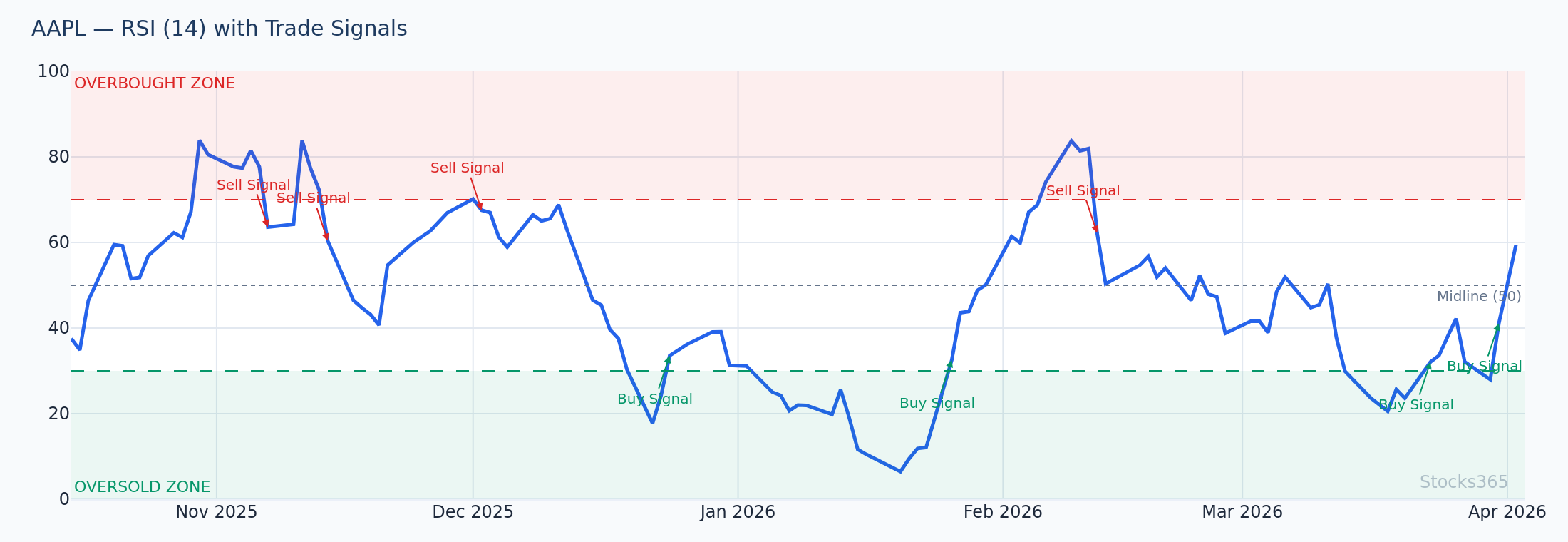
RSI + Moving Averages: Trend Context
Never use RSI in isolation from trend context. A simple rule: if Bitcoin's price is above its 200-day moving average, only take RSI oversold signals (buying dips). If it's below the 200-day MA, only take RSI overbought signals (selling rallies or going short). This trend filter dramatically reduces false signals in both bull and bear markets.
RSI vs. Stochastic for Crypto
Some traders prefer the Stochastic Oscillator for short-term crypto trading because it reacts faster to price changes. However, RSI tends to be more reliable for identifying major turning points in Bitcoin, particularly on the daily and weekly timeframes. For a head-to-head comparison of both indicators and when to use each in your crypto strategy, see our article on RSI vs Stochastic Oscillator: The Essential Guide.
The Stocks365 Approach to RSI Crypto Trading
At Stocks365, we've built our trading intelligence platform around the principle that indicators are only as good as the context around them. Our Trust Score system evaluates signals not just on RSI readings but on the convergence of multiple factors — volume confirmation, trend context, divergence patterns, and broader market conditions — before assigning a signal strength rating.
This multi-factor approach is particularly relevant for crypto. A raw RSI reading of 28 on a Bitcoin daily chart might seem like a screaming buy signal to a beginner. But if the Trust Score analysis flags declining volume, no bullish divergence, and Bitcoin trading below all major moving averages, that same RSI reading might actually suggest caution rather than aggressive buying.
You can explore live signal analysis on our signals dashboard and see how momentum indicators are being applied across multiple assets in real time.
Common RSI Mistakes Crypto Traders Make
Understanding what not to do is just as important as knowing what to do. Here are the most common RSI errors specific to crypto traders:
- Treating every RSI oversold signal as a buy: In a bear market, Bitcoin can remain oversold for extended periods. Always check the broader trend before acting on extreme RSI readings.
- Ignoring the 50 level: The RSI midline is one of the most underutilized signals in crypto. A rejection of RSI at 50 during a downtrend confirms bearish momentum. A sustained break above 50 often signals the beginning of a new uptrend.
- Using RSI alone without price action: RSI is a momentum oscillator, not a crystal ball. Always confirm RSI signals with what the actual price chart is telling you — key support/resistance levels, candlestick patterns, and volume.
- Not adjusting for timeframe: An RSI signal on a 5-minute chart has very different implications than the same signal on a weekly chart. Treat them very differently in terms of position sizing and conviction.
- Overcomplicating the approach: More indicators don't necessarily mean better signals. RSI combined with clear trend analysis and volume confirmation is often all you need for high-quality RSI crypto trading setups.
For a comprehensive walkthrough of applying RSI correctly across different market conditions, including step-by-step entry and exit strategies, see our Ultimate Step-by-Step Guide to Using RSI in Trading.
📌 Key Takeaways: RSI Crypto Trading
- Recalibrate your thresholds: Use 75–80 for overbought and 20–25 for oversold in crypto instead of the standard 70/30 levels.
- Adjust your period: RSI(10) on daily charts is a practical starting point for Bitcoin swing traders; consider RSI(7–9) for shorter timeframes.
- Divergence is king: Bullish and bearish RSI divergences are among the most reliable signals available in Bitcoin trading.
- Use the 50 level: Treat RSI 50 as dynamic support in bull markets and resistance in bear markets for trend confirmation.
- Always add context: Trend direction, volume, and key price levels should always accompany RSI signals — never trade RSI in isolation in crypto.
- Match timeframe to strategy: Daily RSI for swing trades, weekly RSI for macro conviction, shorter timeframes for tactical entries only.
- 24/7 markets demand discipline: The constant availability of crypto trading makes it easy to over-trade RSI signals. Patience and selectivity are your edge.
"The RSI doesn't fail in crypto — traders fail to adapt it. Bitcoin rewards those who treat the indicator as a contextual tool rather than a simple buy/sell signal generator."
Frequently Asked Questions
What is the best RSI setting for Bitcoin trading?
There is no single universally optimal RSI setting for Bitcoin, but RSI(10) or RSI(14) on the daily chart are popular starting points for swing traders. Shorter-term traders often use RSI(7) or RSI(9) on 1-hour or 4-hour charts. The key is testing your chosen setting against real Bitcoin price history and adjusting based on how well it identifies meaningful turning points in the specific market conditions you trade most often.
Is RSI reliable for crypto trading?
RSI can be highly reliable for crypto trading when properly adapted for the asset class. The standard settings and thresholds designed for stock markets don't translate directly to Bitcoin's volatility and 24/7 nature. When traders recalibrate thresholds (using 75–80 for overbought and 20–25 for oversold), use RSI divergence analysis, and combine RSI with trend context and volume confirmation, the indicator becomes a genuinely powerful tool for identifying high-probability trading opportunities in crypto.
What RSI level signals a Bitcoin buy?
Rather than targeting a single fixed number, experienced traders look for RSI to reach the 20–30 zone on the daily chart while also showing bullish divergence (price making lower lows while RSI makes higher lows), volume confirmation of a reversal, and Bitcoin trading near a known support level. In bull markets, RSI touching the 40–45 zone during a pullback can also be a valid buy signal when combined with other confirming factors.
Can RSI predict Bitcoin crashes?
RSI doesn't predict crashes directly, but it does provide early warning signals that can alert traders to deteriorating momentum. Bearish RSI divergence — where Bitcoin's price makes new highs while RSI makes lower highs — has historically appeared before significant Bitcoin corrections. Combined with other risk management tools and macro analysis, RSI divergence can help traders reduce exposure before major drawdowns occur, though no indicator is perfectly predictive.
How does RSI work differently for crypto versus stocks?
Several key differences apply. First, crypto markets never close, meaning momentum can build or collapse continuously without the overnight resets that affect stock RSI readings. Second, Bitcoin's higher baseline volatility means extreme RSI readings (above 80 or below 20) occur more frequently and can persist longer than in equities. Third, crypto's sentiment-driven cycles make RSI overbought conditions last for weeks during bull runs. These differences mean crypto traders need adjusted thresholds, greater patience before acting on signals, and stronger emphasis on multi-factor confirmation before executing trades based on RSI alone.